Plant Care Expert Guides
Grow Bocking 14 Comfrey: The Ultimate Guide to Planting Root Cuttings
Feb
Are you tired of spending a fortune on organic fertilizers that never seem to give your garden that “wow” factor? Have you heard about a “miracle plant” called comfrey, but feel terrified that it might turn into an invasive weed and take over your entire backyard?
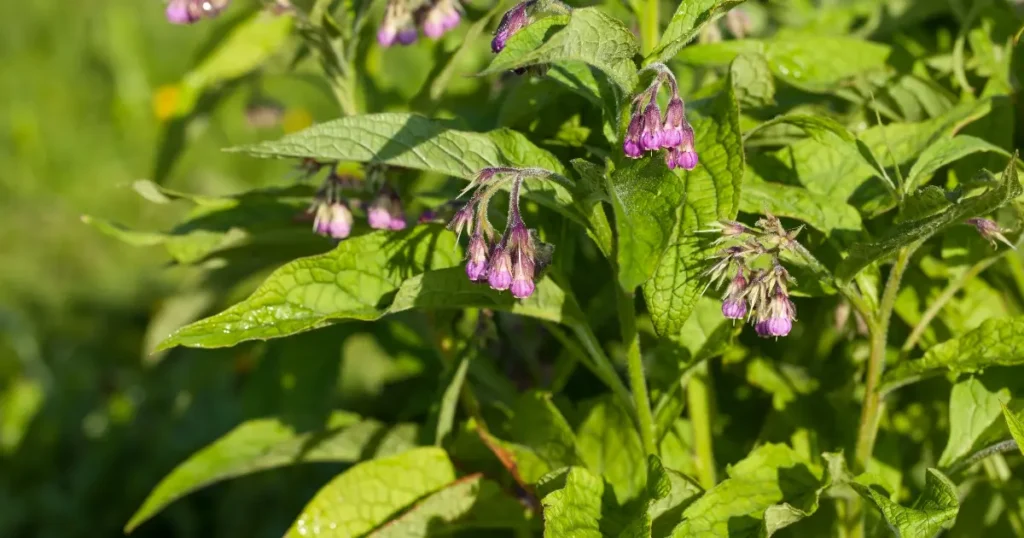
If you are nodding your head, you are in the same spot I was ten years ago. Back then, I was trying to build a sustainable permaculture garden in my small suburban lot. I wanted the benefits of a deep-rooted nutrient accumulator, but I didn’t want to spend the rest of my life digging up unwanted seedlings. That is when I discovered the Bocking 14 Comfrey cultivar of Russian Comfrey (Symphytum x uplandicum).
Unlike common comfrey, Bocking 14 Comfrey is a sterile hybrid. It won’t spread by seed, meaning it stays exactly where you put it. In this guide, I am going to show you exactly how to grow this powerhouse from root cuttings so you can start producing your own free, high-potassium fertilizer right in your own backyard.
Why Bocking 14 is a Game Changer for Gardeners
In the world of organic gardening, we often talk about “dynamic accumulators.” These are plants with massive taproots that reach deep into the subsoil to pull up minerals like potassium, calcium, and magnesium. Bocking 14 is the king of this category.
Because this plant is a sterile strain, you cannot grow it from seeds found in a packet. You must start with root cuttings or crown divisions. This might sound intimidating if you are used to just throwing seeds in the ground, but it is actually much easier and has a nearly 100% success rate if you follow a few simple steps.
Whether you live in the chilly hills of Vermont (Zone 4) or the sunny plains of Texas (Zone 8), Bocking 14 is incredibly resilient. It is the backbone of any “chop and drop” mulch system, providing nutrient-rich organic matter several times a year.
You may like:
- Find More Plants to Love with Easy Plant Finder
- Top 10 Best Types of Peppers You Can Grow in Your Garden
- How to Grow Your Own Sweet Potato Slips
When and Where to Plant Your Comfrey Roots
Before you stick your root segments in the dirt, you need to pick the right spot. Remember this: Comfrey is for life. Because it grows a taproot that can reach ten feet deep, it is nearly impossible to move once established. Any tiny piece of root left behind will grow into a new plant.
Sunlight and Soil
Bocking 14 loves full sun, but in hotter climates like Arizona or Florida, it will appreciate some afternoon shade. It isn’t picky about soil, but it truly thrives in nitrogen-rich, well-drained loam. If you have a spot near your compost pile or a greywater outlet, your comfrey will be very happy.
Timing
The best time to plant root cuttings in the United States is early spring, just as the soil becomes workable. This gives the plant a full growing season to establish that legendary root system before the winter dormancy hits.
Planting Bocking 14 Root Cuttings
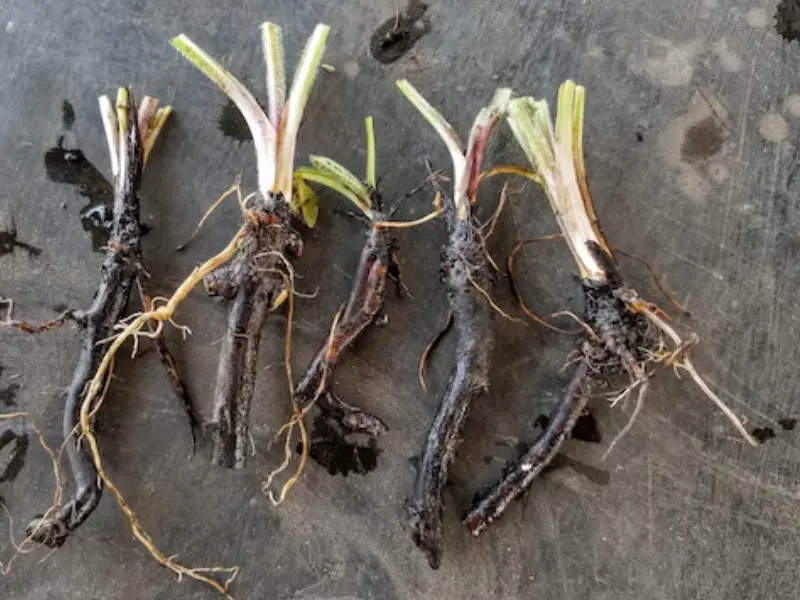
When you order your cuttings online, they will usually arrive as small, dark brown sticks, roughly 2 to 6 inches long. Don’t be fooled by their appearance; there is a lot of life packed into those segments.
1. Preparing the Bed
Clear the area of any perennial weeds. Dig a hole or a small trench. If your soil is particularly poor, mix in a little bit of aged compost, but don’t overdo it. Bocking 14 is tough and doesn’t need to be pampered.
2. Planting Depth and Orientation
This is where most beginners get nervous. Which way is up?
-
Horizontal Planting: This is the safest bet. Lay the root cutting flat on its side about 2 inches deep.
-
Vertical Planting: If you can clearly see buds or “eyes” on one end, plant it vertically with the buds facing up, about 2 inches below the surface.
3. Spacing
Give these giants room to breathe. Each Bocking 14 plant can grow 3 feet wide. Space your cuttings at least 2 to 3 feet apart. It might look like a lot of empty space now, but by the second year, you will be glad you gave them room.
4. Watering
Keep the soil moist but not soggy. Until you see green leaves poking through the mulch, the root segment is vulnerable to drying out. Once the plant is established, it is remarkably drought-tolerant, but for the first few months, keep that watering can handy.
Caring for Bocking 14 Comfrey Plants
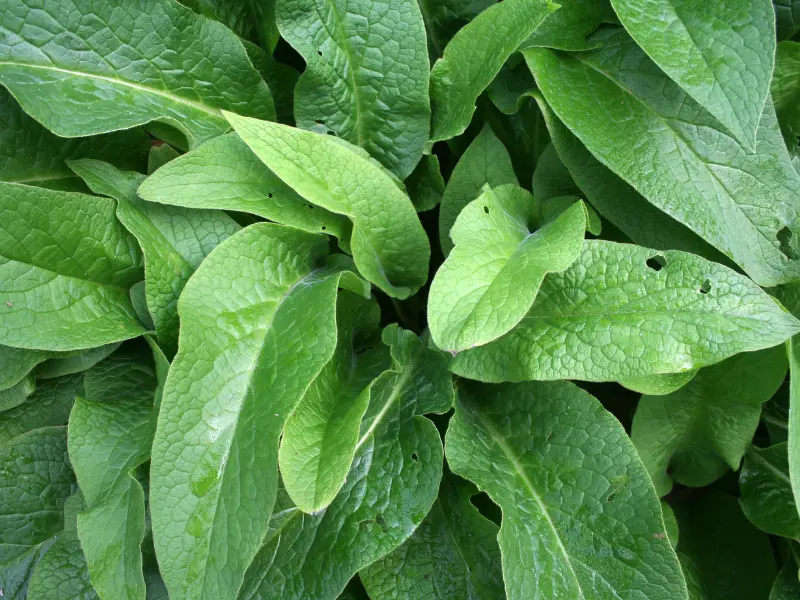
The first year is all about root development. I know it is tempting to start harvesting those lush green leaves for comfrey tea or mulch immediately, but patience is key.
The Golden Rule: Do not harvest any leaves during the first growing season. Let the plant photosynthesize and send all that energy down into the taproot. This ensures that by year two, you will have a plant that can withstand multiple “chop and drop” cycles per year.
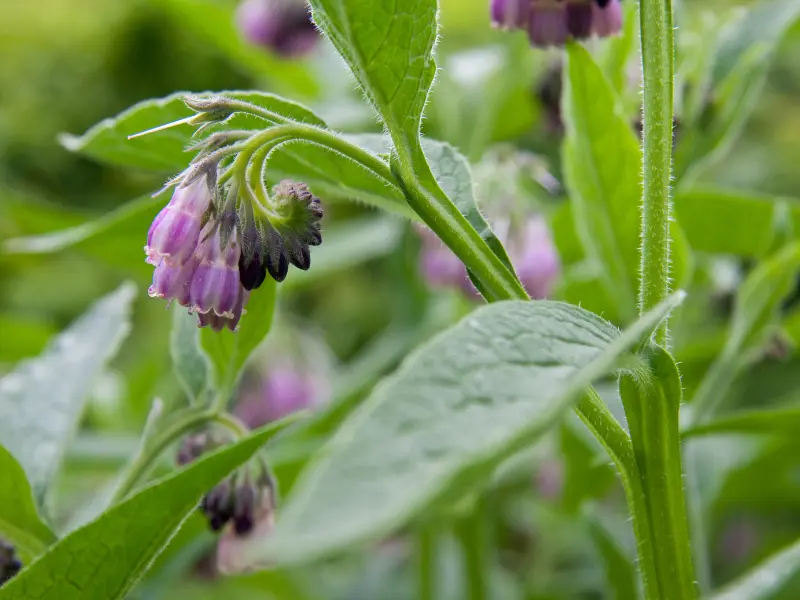
During the winter, the leaves will die back to the ground. Don’t panic! This is normal. In the spring, you will see little purple-tinged nubbins emerging from the soil, and your comfrey will return bigger and stronger than before.
A few years ago, a friend of mine in Oregon was struggling with a “dead zone” in his garden where nothing would grow. The soil was compacted and lacked nutrients. I gave him three Bocking 14 root cuttings. He planted them, forgot about them for a month, and was shocked when they sprouted massive, vibrant leaves.
Today, those three plants provide enough mulch to feed his entire vegetable patch. He even uses the leaves as a nitrogen-rich additive for his chicken feed. That is the power of Bocking 14; it turns “bad” soil into a productive resource.
Frequently Asked Questions
How long does it take for Bocking 14 roots to sprout?
Typically, you will see green shoots within 3 to 6 weeks. If the weather is still very cold, it might take a little longer. Just keep the soil moist and be patient.
Can I grow Bocking 14 in containers?
You can, but it is not ideal long-term. Because of the deep taproot, you would need a very deep pot (like a 15-gallon drum). It is much better off in the ground where it can access subsoil minerals.
Is comfrey safe for livestock?
Many farmers in the US use Bocking 14 as supplemental fodder for chickens, pigs, and cattle. It is high in protein and minerals. However, always consult with a local vet or agricultural extension office regarding specific quantities for your animals.
How do I make comfrey tea fertilizer?
Simply stuff a bucket full of harvested leaves, weigh them down with a brick, and fill it with water. Let it sit for 3 to 4 weeks (fair warning: it will smell terrible!). Dilute the resulting black liquid 10:1 with water and use it to feed your tomatoes and peppers.
Planting Bocking 14 is one of the best investments you can make for your soil. It is a one-time effort that pays dividends in free fertilizer for decades. Once you see your tomato plants reacting to a dose of comfrey tea, you will never go back to store-bought chemicals.
If you are looking for more ways to build healthy soil, check out our related guide on How to Build a No-Till Garden Bed or learn about The Best Cover Crops for Small Backyards.
