Overview
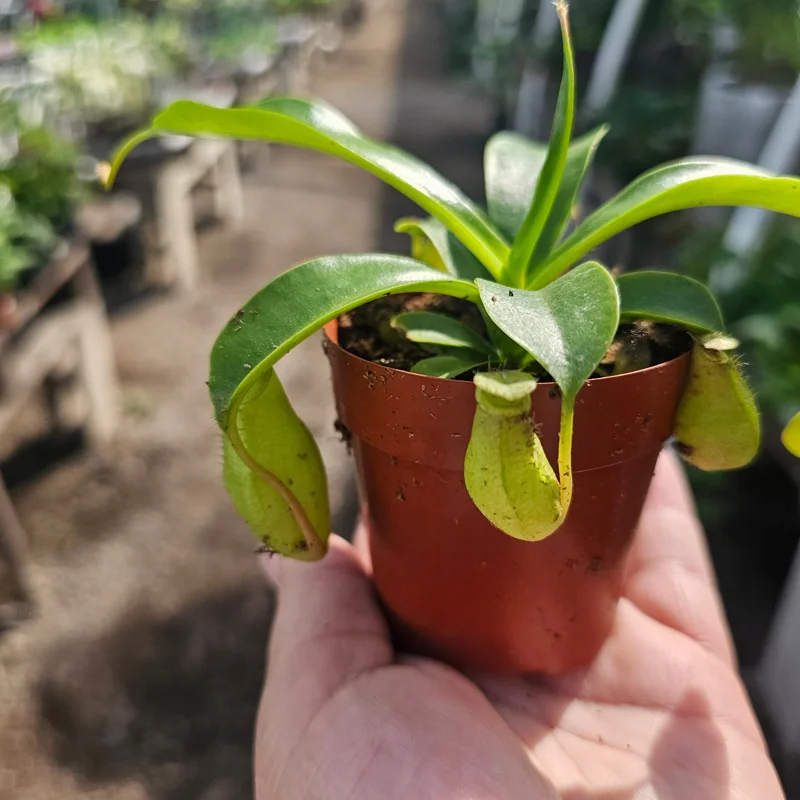
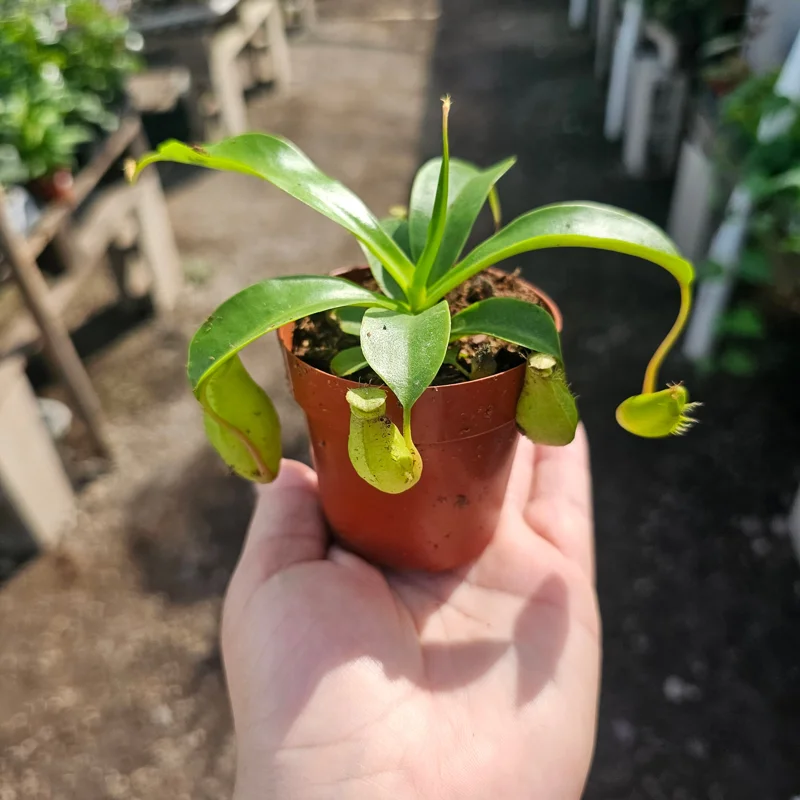
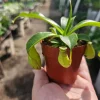
Introduce an extraordinary botanical specimen to your collection with the Nepenthes Pitcher Plant. This fascinating hanging carnivorous plant, often referred to as Monkey Cups, is a true marvel of nature, captivating observers with its unique pitcher-shaped leaves designed to trap insects. Originating from tropical regions, Nepenthes are epiphytic or terrestrial plants that thrive in humid environments, making them an exciting challenge and a rewarding addition for plant enthusiasts. This live Nepenthes comes in a convenient 3-inch pot, ready to display and begin its journey in your home or garden. Its intricate pitchers not only serve as a natural pest control but also add an exotic and decorative element to any space. Each plant is a miniature ecosystem, showcasing the incredible adaptations of the natural world.
The Nepenthes genus boasts a wide variety of species, each with its own distinct pitcher shapes, sizes, and colors. Our offering provides a vibrant and healthy specimen, perfect for those eager to explore the world of tropical insectivorous plants. With proper care, your pitcher plant will continue to develop new, beautifully formed traps, creating a stunning visual display. It’s an excellent choice for educational purposes, helping to illustrate the wonders of plant biology, or simply as a conversation starter among guests.
Key Benefits
The Nepenthes Pitcher Plant offers numerous advantages beyond its striking appearance, making it a highly desirable addition to any plant collection. Here are some key benefits:
- Natural Insect Control: The primary benefit of this hanging carnivorous plant is its ability to naturally catch and digest insects, such as flies and ants. This provides an organic way to manage minor household pests without chemicals.
- Exotic Aesthetic Appeal: With its unique pitcher formations and lush green foliage, the Nepenthes adds an unparalleled tropical and exotic touch to any indoor or outdoor setting. It’s a living piece of art.
- Educational Value: Observing the carnivorous nature of the Nepenthes provides a fascinating educational experience for all ages, demonstrating the incredible adaptations plants develop for survival.
- Conversation Starter: Its unusual appearance and insect-trapping capabilities make the Nepenthes Pitcher Plant an instant conversation starter, sure to intrigue visitors and spark curiosity.
- Low Maintenance (with proper humidity): While requiring specific conditions, once established, a Nepenthes can be relatively straightforward to care for. Understanding its need for high humidity is key to successful growth.
- Variety of Growth Habits: Many Nepenthes species are vining, making them ideal as hanging baskets, allowing their pitchers to dangle elegantly and truly live up to their ‘hanging’ moniker.
- Air Purification: Like many plants, Nepenthes contribute to a healthier indoor environment by converting carbon dioxide into oxygen, enhancing air quality in your living space.
Plant Care & Growing Tips
Caring for your Nepenthes Pitcher Plant involves understanding its tropical origins to replicate its natural habitat. These plants thrive in high humidity and bright, indirect light. Place your plant in an east or west-facing window, or under grow lights, ensuring it receives several hours of bright light without direct, scorching sun. Direct sunlight can burn the delicate pitchers and leaves. A common mistake in monkey cups care is insufficient humidity; aim for 60-80% relative humidity. This can be achieved by using a humidifier, placing the pot on a pebble tray with water (ensuring the pot doesn’t sit in water), or grouping it with other humidity-loving plants.
Watering is crucial for these tropical insectivorous plant specimens. Always use distilled water, rainwater, or reverse osmosis water, as tap water’s minerals can be detrimental. Keep the soil consistently moist but never soggy. Allow the top layer of the potting mix to just begin to dry out before watering again. The ideal soil mix for Nepenthes is a very well-draining, acidic, and nutrient-poor substrate, such as a blend of sphagnum moss, perlite, and orchid bark. Avoid rich potting soils. Fertilization is generally not required, as the plant obtains nutrients from trapped insects; excessive fertilization can harm the roots. Temperatures between 65-85°F (18-29°C) are ideal. If you’re looking for a pitcher plant for sale, ensuring you can meet these environmental needs is key to its long-term health.
Size & Details
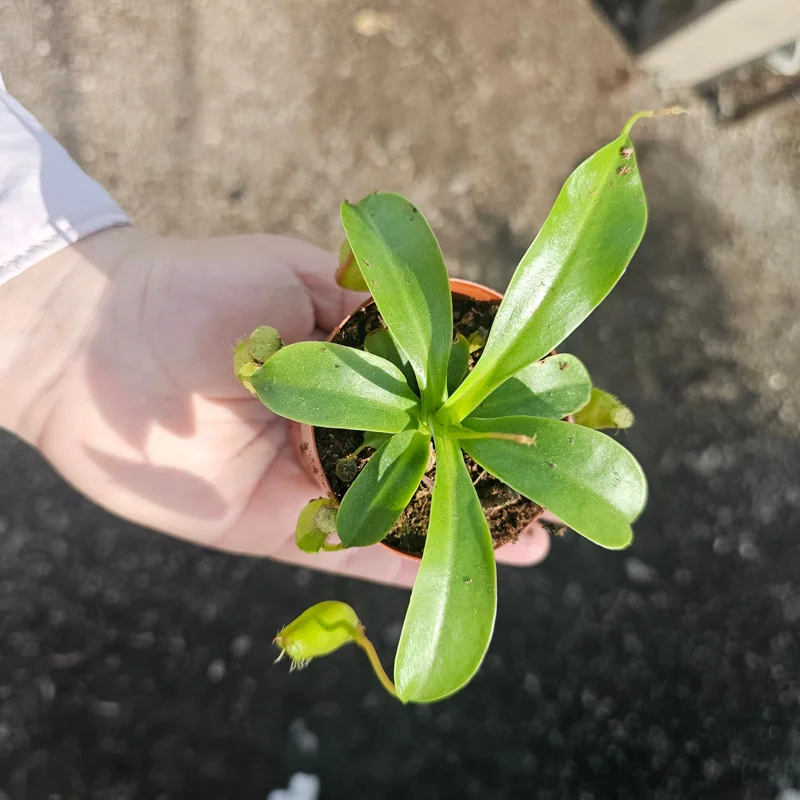
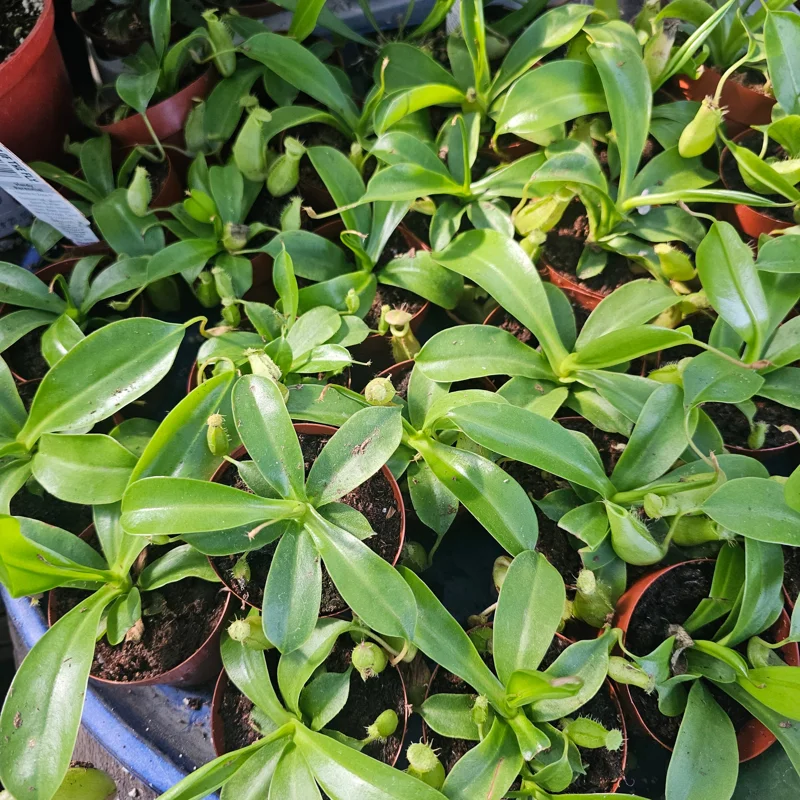
This offering is for a healthy Nepenthes Pitcher Plant, shipped in a 3-inch nursery pot. The plant’s exact size will vary slightly due to natural growth, but it will be a well-established specimen with developing pitchers. Nepenthes are known for their vining growth habit, and while this plant is currently compact, it will eventually grow longer vines, making it an excellent candidate for a hanging basket. The pitchers typically range from 1 to 3 inches in length on young plants, growing larger as the plant matures. Expect a moderate growth rate, with new pitchers forming regularly under optimal conditions. This hanging carnivorous plant is perfect for starting your own collection or adding diversity to an existing one. It is shipped as a live potted plant, ensuring minimal stress during transit and ease of transplanting if desired.
Frequently Asked Questions
- Q: How big does this Nepenthes Pitcher Plant get? A: While shipped in a 3-inch pot, Nepenthes can develop long vining stems, often several feet in length, with pitchers growing larger over time. The size depends on the specific species and growing conditions.
- Q: Is this an indoor or outdoor plant? A: This tropical insectivorous plant can be grown indoors in a bright, humid environment or outdoors in suitable tropical or subtropical climates where temperatures and humidity remain consistently high.
- Q: How much sunlight does it need? A: Nepenthes thrive in bright, indirect light. Avoid direct, harsh sunlight which can scorch the leaves and pitchers. Filtered light or morning sun is ideal.
- Q: Is this plant easy to care for? A: Monkey cups care requires specific conditions, particularly high humidity and proper watering with distilled water. While not as easy as some houseplants, with attention to these needs, they are very rewarding.
- Q: What condition will it arrive in? A: Your pitcher plant for sale will arrive as a live, healthy plant in its nursery pot, carefully packaged to minimize stress during shipping. Some soil shifting might occur.
- Q: Is it shipped in soil? A: Yes, the Nepenthes Pitcher Plant is shipped in its original 3-inch nursery pot with its growing medium, ready for you to place in your desired location.
- Q: How often should I water my Nepenthes? A: Water frequently enough to keep the soil consistently moist, but not waterlogged. Always use distilled, reverse osmosis, or rainwater, and allow the top layer of soil to just begin to dry between waterings.
- Q: Does it really eat insects? A: Yes, the pitchers are modified leaves that produce nectar to attract insects. Once inside, the slick walls and digestive fluid at the bottom trap and dissolve the prey, providing nutrients to the plant.
- Q: Can I feed my hanging carnivorous plant? A: You can occasionally drop small insects into the pitchers if the plant isn’t catching enough on its own. However, avoid feeding it meat or human food, and do not overfeed.
- Q: What is the best soil mix for Nepenthes? A: A well-draining, acidic, and nutrient-poor mix is best, such as long-fibered sphagnum moss mixed with perlite or orchid bark. Avoid standard potting soil.




Reviews
There are no reviews yet.