Overview
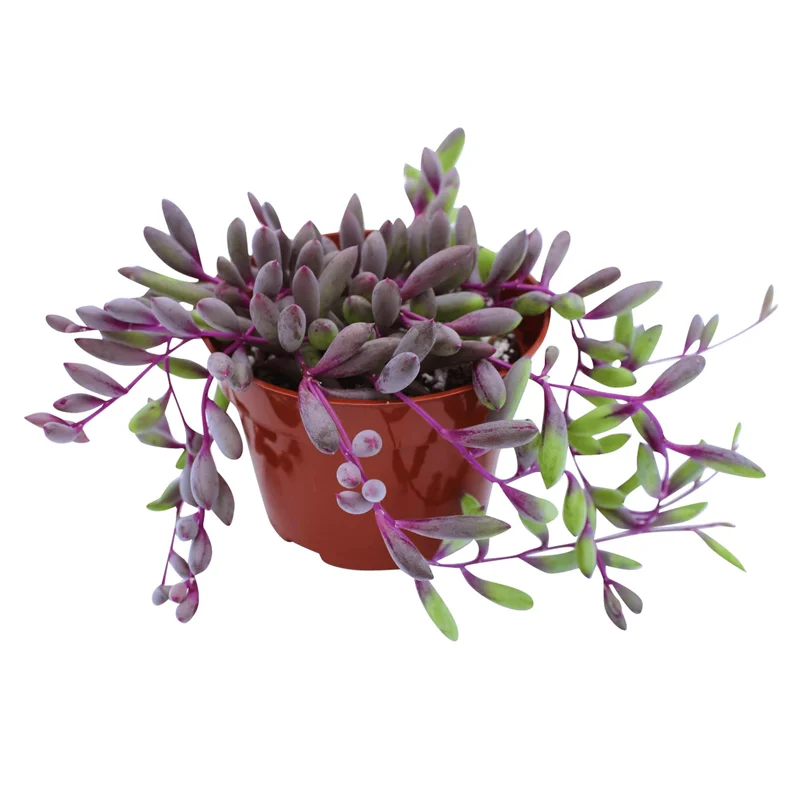
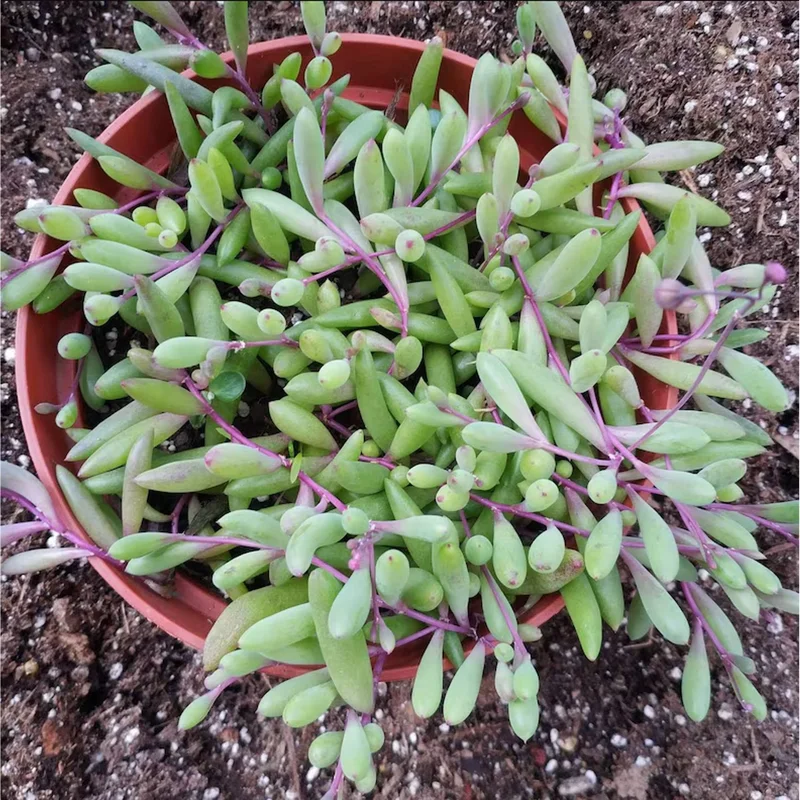
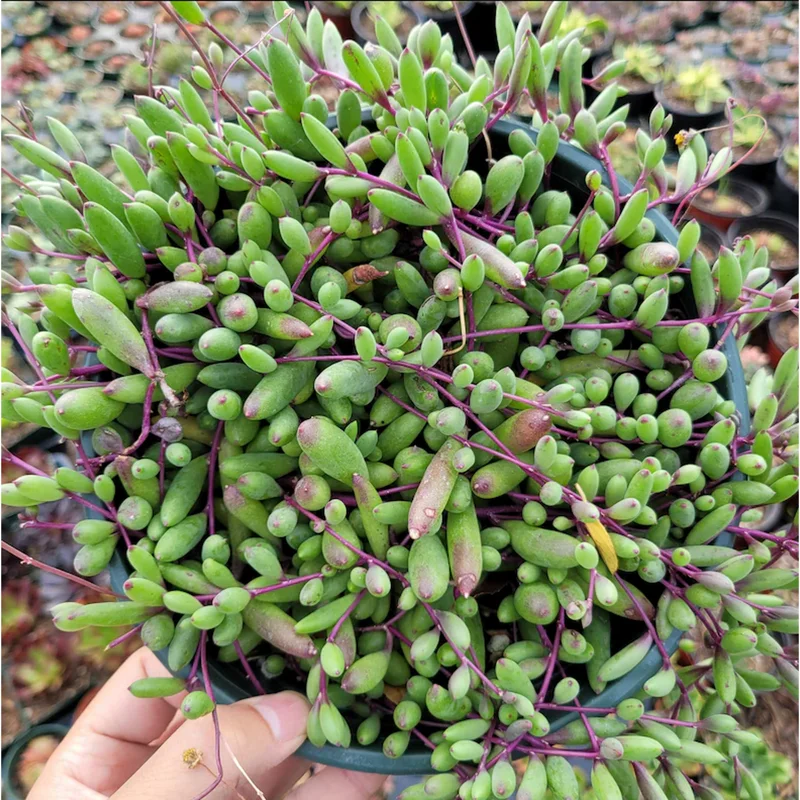
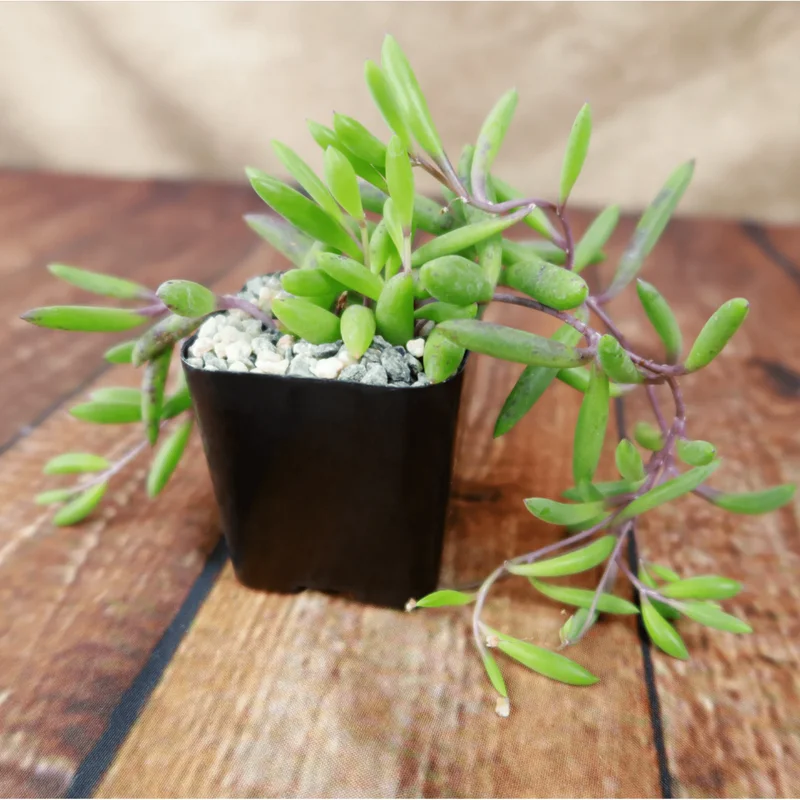
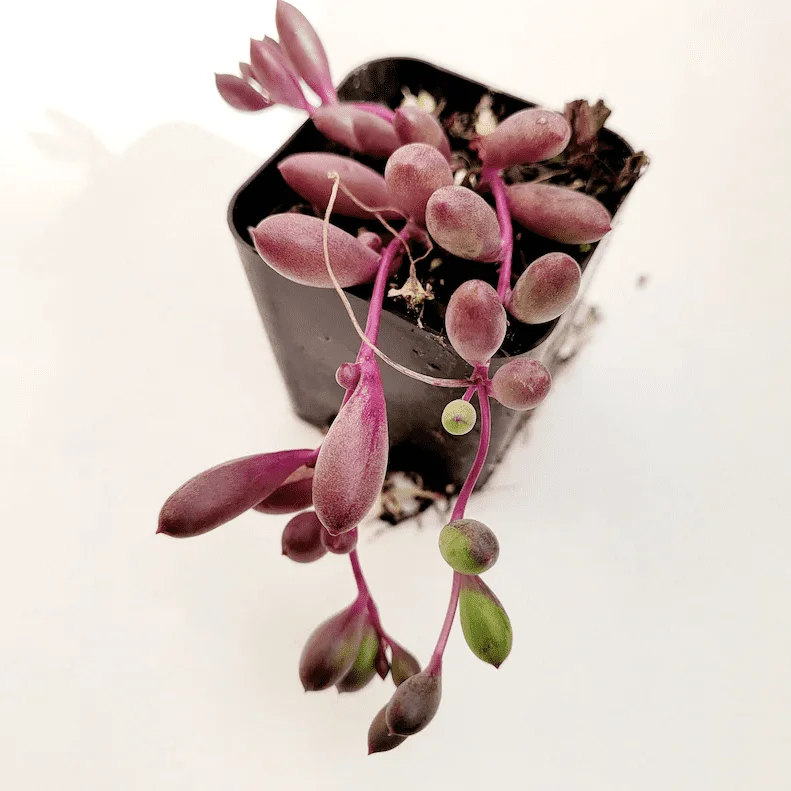
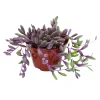
Experience the unique beauty of the ruby necklace succulent live plant, scientifically known as Othonna capensis. This exceptional trailing succulent is celebrated for its distinctive bean-shaped leaves that dramatically transform into a striking ruby red hue when exposed to stress, such as direct sunlight or cooler temperatures. Often referred to simply as ‘Ruby Necklace’, this fast-growing plant adds a cascade of vibrant color to any space. Its thin, red or purple stems can grow up to about 2 inches before gracefully trailing downwards, making it an ideal choice for hanging planters or shelves. Unlike many succulents, the Othonna capensis is known to produce charming, small yellow flowers almost year-round, further enhancing its visual appeal. Whether you’re a seasoned succulent enthusiast or a beginner looking for an eye-catching addition, this plant offers both beauty and ease of care.
This particular offering is a healthy ruby necklace succulent live plant, ready to thrive in your home or garden. Its resilience and striking coloration make it a popular choice for various decorative settings, from sunny windowsills to outdoor rock gardens. The ‘Ruby Necklace’ is not just a plant; it’s a living piece of art that continuously changes and adapts, offering a dynamic display of color throughout the seasons. Its low-maintenance nature ensures that even those new to plant care can successfully cultivate this stunning specimen.
Key Benefits
The ruby necklace succulent live plant offers a multitude of benefits that make it a cherished addition to any plant collection. Its unique characteristics contribute to both aesthetic appeal and ease of maintenance, making it a truly rewarding plant to own.
- Stunning Color Transformation: The most captivating feature is its ability to change leaf color to a brilliant ruby red under stress, providing a dynamic and ever-evolving display. This vibrant hue adds a pop of color to any decor, making it stand out among other succulents.
- Trailing Growth Habit: With stems that elegantly trail downwards, the ‘Ruby Necklace’ is perfect for hanging baskets, elevated planters, or cascading over the edges of pots, creating a lush, flowing effect. This makes it an excellent choice for maximizing vertical space.
- Year-Round Blooms: Unlike many succulents that flower seasonally, Othonna capensis can produce cheerful yellow, daisy-like flowers throughout the year. These small but frequent blooms add an extra layer of charm and interest.
- Low Maintenance & Drought Tolerant: As a succulent, it naturally requires minimal watering and is highly resilient, making it an ideal plant for busy individuals or those new to gardening. Its drought tolerance means it can withstand periods of neglect.
- Versatile Placement: Suitable for both indoor and outdoor environments, the ruby necklace plant indoor or outdoor can thrive in various settings, from a bright office desk to a sunny patio, provided its light and water needs are met.
- Unique Foliage Texture: The distinctive bean-shaped leaves add an interesting texture to arrangements, complementing other plants with different leaf forms. This unique foliage contributes to its overall exotic appeal.
- Air Purifying Qualities: Like many houseplants, the ‘Ruby Necklace’ contributes to improved indoor air quality by absorbing toxins and releasing oxygen, creating a healthier living environment.
Plant Care & Growing Tips
Caring for your ruby necklace succulent live plant is relatively straightforward, making it a fantastic choice for both novice and experienced plant enthusiasts. Understanding its specific needs will ensure vibrant growth and stunning coloration. For optimal health, the ‘Ruby Necklace’ thrives in bright, indirect light to partial sun. While it enjoys ample light, especially to encourage its ruby-red coloration, it’s important to protect it from intense, scorching afternoon sun, particularly in hotter climates. If grown indoors, a south or west-facing window with some sheer curtain protection is ideal. Outdoors, a spot that receives morning sun and afternoon shade works best. Many Othonna capensis care guides emphasize the importance of light for color development.
When it comes to watering, less is often more for this succulent. Like most succulents, the ‘Ruby Necklace’ is highly susceptible to overwatering, which can lead to root rot. Allow the soil to dry out completely between waterings. A good rule of thumb is to check the soil moisture with your finger; if the top inch or two feels dry, it’s time to water thoroughly until water drains from the bottom of the pot. Reduce watering significantly during its dormant period in winter. The ideal soil for Othonna capensis is a well-draining, acidic mix with a pH between 6.0 and 6.5. Commercially available cactus and succulent soil mixes are excellent choices, often amended with perlite or pumice to enhance drainage. Ensure the pot has drainage holes to prevent waterlogging. Fertilize sparingly during the growing season (spring and summer) with a diluted, balanced liquid succulent fertilizer, typically once a month or every other month. Avoid fertilizing in fall and winter.
The ‘Ruby Necklace’ prefers warmer temperatures and is not frost-tolerant. If grown outdoors in regions with cold winters, it should be brought indoors when temperatures drop below 40°F (4°C). It is generally pest-resistant, but occasionally mealybugs or aphids can be an issue. Treat with insecticidal soap or neem oil if pests are observed. Proper trailing succulents for sale often come with these care instructions to ensure longevity. Regular pruning can help maintain its shape and encourage bushier growth, and the cuttings can be easily propagated to create new plants.
Size & Details
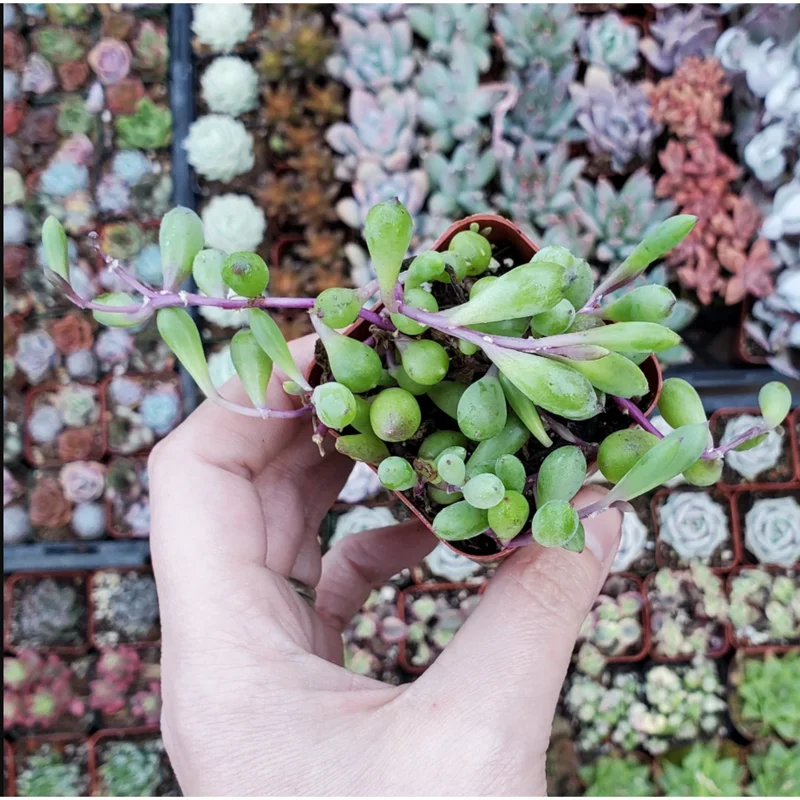
This offering is for one healthy ruby necklace succulent live plant, typically shipped in a 2-inch nursery pot. The plant will arrive well-rooted and ready for transplanting into your preferred decorative container or hanging basket. The stems of the ‘Ruby Necklace’ typically grow up to about 2 inches before beginning their characteristic trailing habit. Given optimal conditions, these trailing stems can reach lengths of several feet, creating a stunning visual display. Its growth rate is considered fast for a succulent, allowing you to enjoy its cascading beauty relatively quickly. The plant’s compact size in its initial stages makes it perfect for windowsills, desks, or as part of a larger succulent arrangement.
When mature, the plant can spread to fill a pot, with numerous thin stems adorned with its unique bean-shaped leaves. This succulent is an evergreen perennial, meaning it retains its foliage year-round, providing continuous color and interest. The small, yellow, daisy-like flowers, which can appear throughout the year, add a delicate touch to its robust foliage. Shipping will be done carefully to ensure the plant arrives in excellent condition, often with some soil to minimize transplant shock. This succulent plant red leaves variety is truly a gem for any plant lover.
Frequently Asked Questions
- Q: How big does this plant get? A: The ruby necklace succulent live plant typically has stems that grow to about 2 inches before they start trailing. These trailing stems can eventually reach lengths of several feet, creating a beautiful cascading effect, especially in hanging baskets.
- Q: Is this an indoor or outdoor plant? A: The ‘Ruby Necklace’ is versatile and can thrive both indoors and outdoors. It’s often grown as a ruby necklace plant indoor in cooler climates, or outdoors in warmer, frost-free regions. It needs protection from harsh freezing temperatures.
- Q: How much sunlight does it need? A: This succulent prefers bright, indirect light to partial sun. To achieve its vibrant ruby-red coloration, it needs good light exposure, but avoid intense, direct afternoon sun which can scorch its leaves.
- Q: Is this plant easy to care for? A: Yes, the ‘Ruby Necklace’ is considered a low-maintenance succulent, making it suitable for beginners. Its primary needs are well-draining soil and careful watering to avoid overwatering, along with adequate light.
- Q: What condition will it arrive in? A: Your ruby necklace succulent live plant will arrive well-packaged in a 2-inch nursery pot, typically with some soil to ensure its health during transit. We take utmost care to ensure it reaches you in excellent condition.
- Q: How long until it blooms? A: One of the delightful characteristics of Othonna capensis is its ability to bloom almost year-round, producing small, cheerful yellow flowers. With proper care, you can expect to see blooms throughout various seasons.
- Q: What’s the minimum temperature it can tolerate? A: The ‘Ruby Necklace’ is not frost-hardy. It should be protected from temperatures below 40°F (4°C). If you live in a colder climate, it’s best to grow it in a container that can be brought indoors during winter.
- Q: What kind of soil is best for this succulent? A: This plant thrives in well-draining, acidic soil with a pH between 6.0 and 6.5. A commercial cactus and succulent potting mix, often amended with perlite or pumice, is highly recommended to ensure proper drainage.
- Q: Can I propagate the ‘Ruby Necklace’? A: Yes, the ‘Ruby Necklace’ is relatively easy to propagate from stem cuttings. Simply take a cutting, allow it to callus for a day or two, and then plant it in well-draining soil. This is a great way to expand your collection of trailing succulents for sale.
- Q: Why are my succulent’s leaves not turning red? A: The vibrant ruby-red coloration is often a stress response to bright light or cooler temperatures. If your plant isn’t turning red, it might need more direct sunlight exposure (gradually introduced) or slightly cooler conditions to encourage this beautiful transformation in its succulent plant red leaves.




Reviews
There are no reviews yet.