NEED SUPPORT WITH YOUR ORDER? Get in touch
Not satisfied with your purchase?
Enter your Order ID on website, and we'll resolve it right away.

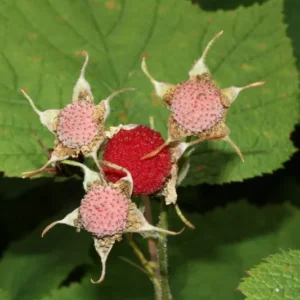
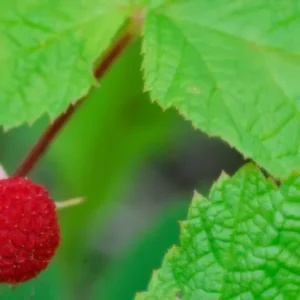
$42.99
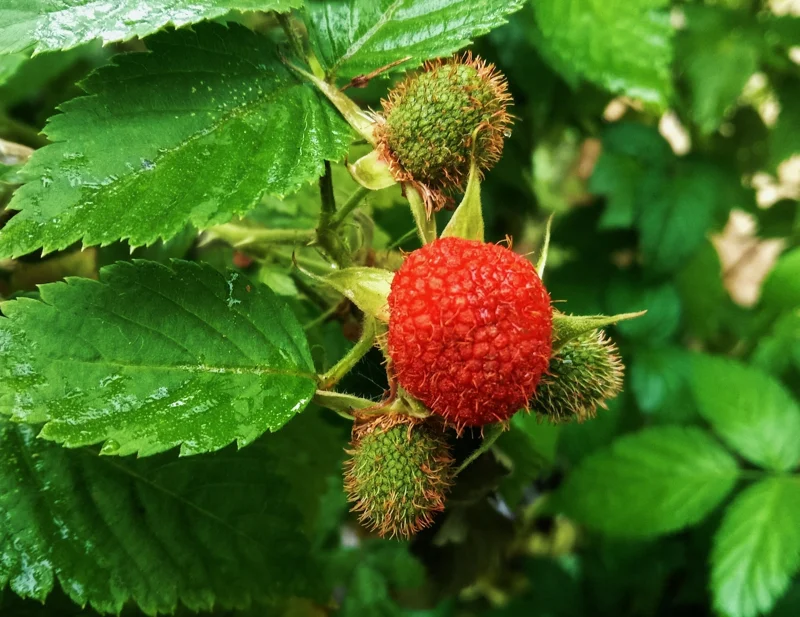
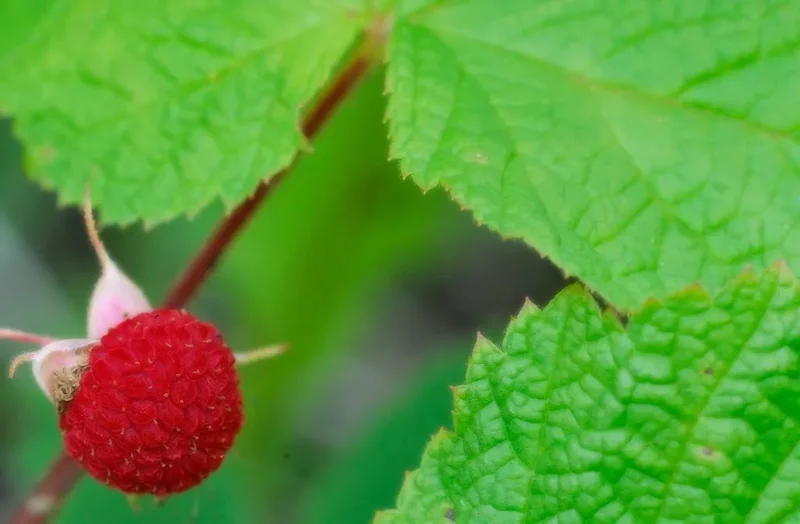
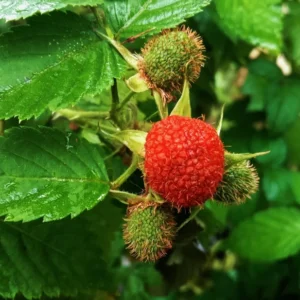
Cultivate your own delicious berries with this thimbleberry bare root plant (Rubus parviflorus). Ideal for native gardens, erosion control, and attracting wildlife, this thornless fruiting shrub offers sweet-tart berries and ornamental appeal. Perfect for USDA Zones 3-8, these rubus parviflorus starters are ready to thrive.
Mar 03
Mar 08 - Mar 10
Mar 13 - Mar 17
USDA Hardiness Zone
Soil Type
Sunlight Exposure
Expected Planting Period
Shipping and return policies: Our Alive & Thrive Guarantee covers issues with your plants within the first 30 days. Get in touch with us via email, and our team will review your concerns and, if necessary, provide you with a one-time replacement at no cost.
If you're unsure about your hardiness zone, feel free to reach out to us. Our team will answer your questions and help you find the plants that are truly suitable for your environment, climate, and personal preferences.
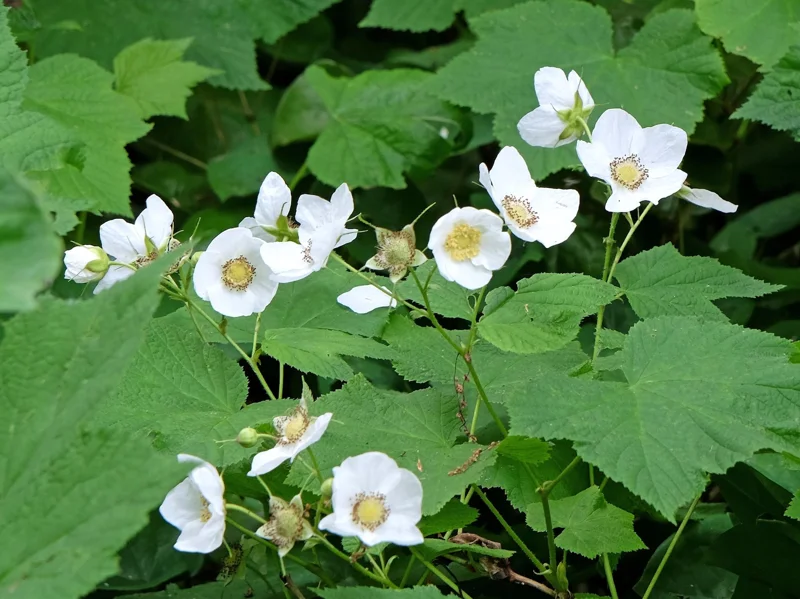
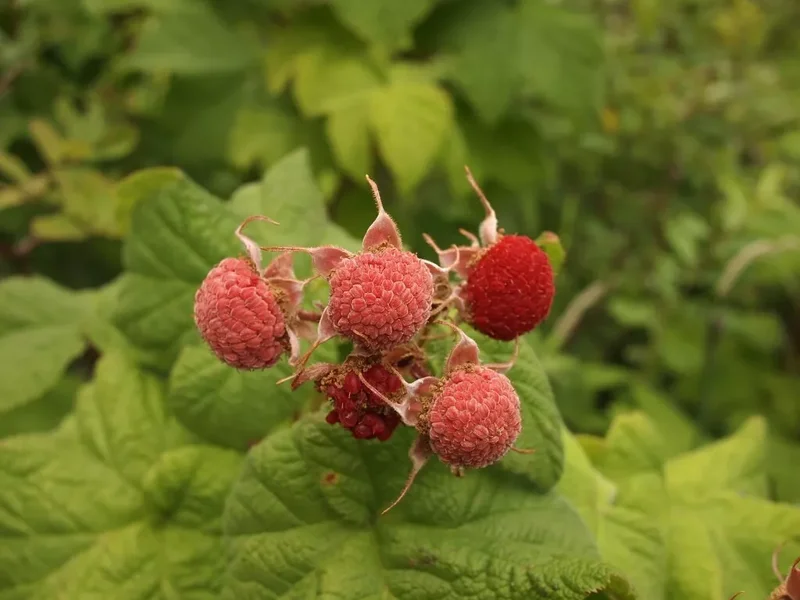
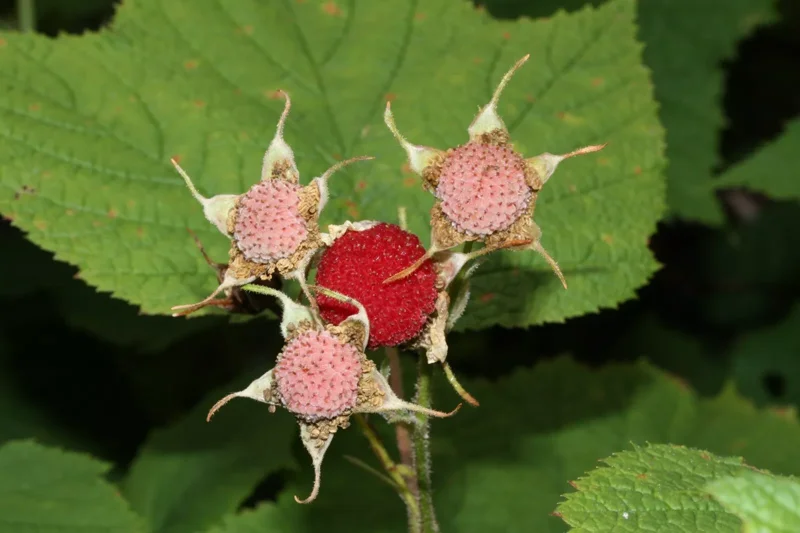
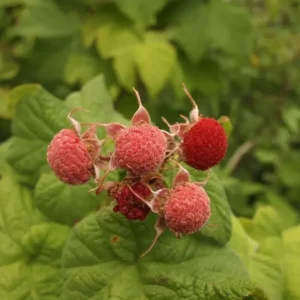
Bring the beauty and bounty of the wild to your garden with our thimbleberry bare root plant. Scientifically known as rubus parviflorus, the Thimbleberry is a remarkable thornless ornamental fruiting plant native to western and northern North America. These vigorous bare root starter plants are an excellent choice for gardeners looking to enhance their landscape with a plant that offers both aesthetic appeal and practical benefits. Thimbleberries are perfect for wildlife gardens, erosion control projects, and habitat restoration, providing essential food and shelter for local fauna. Enjoy the unique aesthetic of their large, soft, maple-like leaves and the delight of harvesting your own sweet and tart berries, renowned for a flavor richer than raspberries. Our starter plants are carefully nurtured to ensure healthy root systems, guaranteeing quality and adaptability for successful growth in your garden. These are not wild-dug plants, ensuring their health and vitality for your home cultivation.
Adding a thimbleberry bare root plant to your outdoor space offers a multitude of advantages, transforming your garden into a vibrant, productive ecosystem. Discover the many reasons why these plants are a cherished addition:
Ensuring your thimbleberry bare root plant thrives requires understanding its basic needs for sunlight, soil, and moisture. These resilient plants are relatively easy to care for once established, making them a rewarding addition to any garden. For optimal growth, Thimbleberries prefer a location that receives full sun to part shade. In hotter climates, some afternoon shade can prevent leaf scorch, while in cooler regions, more sun will encourage better fruiting. Aim for at least 4-6 hours of direct sunlight daily for the best results.
Soil is a crucial factor for a healthy native thimbleberry. They thrive in rich, organic, acidic, moist, and well-drained soils. Amend your planting area with compost or other organic matter to improve soil structure and fertility. While they prefer consistent moisture, it’s important that the soil is not waterlogged, as this can lead to root rot. Regular watering, especially during dry spells and the plant’s establishment phase, is essential. Once established, they can tolerate slightly drier conditions but will perform best with consistent hydration. These plants are hardy in USDA Zones 3-8, making them suitable for a wide range of temperate climates.
When planting your fruiting shrub, ensure adequate spacing. Plant bare root Thimbleberries 3-4 feet apart to allow ample room for their spreading habit and establishment. Fertilize annually in early spring with a balanced, slow-release fertilizer or a layer of compost to provide essential nutrients. Pruning can be done in late winter or early spring to remove dead or weak canes, promote new growth, and maintain desired size and shape. While generally robust, keep an eye out for common garden pests and diseases, though Thimbleberries are quite resistant. With proper care, your thimbleberry bare root plant will provide years of beauty and delicious fruit.
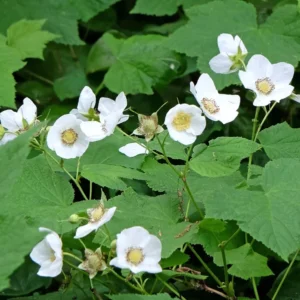
Your thimbleberry bare root plant will arrive as a carefully nurtured starter, ready for planting. These plants typically grow to a mature height of 2 to 8 feet tall, with a similar spread, forming dense thickets over time. The ultimate size can depend on growing conditions, climate, and pruning practices. They are known for a moderate to fast growth rate, establishing well within the first year and beginning to produce fruit within 1-2 seasons. These plants are shipped as bare roots, meaning they are dormant and without soil, which minimizes transplant shock and ensures a healthy start. This form is ideal for planting during the dormant season in early spring or late fall. Expect the large, soft, maple-like leaves to emerge as temperatures warm, followed by fragrant white flowers and then the distinctive red, thimble-shaped berries.
| Bare Root Thimbleberry | 1 Starter plant, 2 Starter plants, 3 Starter plants |
|---|
You must be logged in to post a review.
Sold 100 products
Original price was: $57.98.$28.99Current price is: $28.99.
Sold 66 products
Original price was: $79.98.$39.99Current price is: $39.99.
Sold 88 products
Original price was: $58.58.$29.29Current price is: $29.29.
Sold 66 products
Original price was: $56.99.$44.90Current price is: $44.90.
Sold 99 products
Original price was: $73.98.$36.99Current price is: $36.99.
Sold 68 products
Original price was: $78.99.$48.99Current price is: $48.99.
Sold 98 products
Original price was: $39.98.$19.99Current price is: $19.99.
Sold 76 products
Original price was: $72.99.$52.99Current price is: $52.99. $42.99
Reviews
There are no reviews yet.