Overview
The Queensland Bottle Tree live plant (Brachychiton rupestris) is a truly remarkable specimen, celebrated for its iconic, swollen trunk that gracefully tapers upwards, giving it the appearance of a botanical bottle. Native to the arid and semi-arid regions of Queensland, Australia, this tree has evolved a unique adaptation to survive prolonged dry spells by storing water within its distinctive trunk. This fascinating characteristic makes it a highly sought-after plant for gardeners and landscapers looking for a conversation starter and a resilient addition to their outdoor spaces. The Queensland Bottle Tree live plant is not just a survivor; it’s also an elegant ornamental with striking foliage and delicate bell-shaped flowers. It’s often grown as a feature tree, adding significant visual interest and a touch of the exotic to various garden designs.
Known by its scientific name, Brachychiton rupestris care is relatively straightforward, making it accessible to a wide range of gardening enthusiasts. While it can reach impressive heights of 60-65 feet in its native habitat, it generally remains much smaller when cultivated, especially in containers, making it suitable for diverse garden sizes. Its leaves can vary in shape, often shiny and deeply lobed, contributing to its overall ornamental appeal. Small clusters of cream to yellowish-green flowers add a subtle charm, typically appearing before the new leaves emerge. This tree is a testament to nature’s ingenuity, offering both beauty and extraordinary resilience.
Key Benefits
The Queensland Bottle Tree live plant offers a multitude of benefits, making it an excellent choice for a variety of garden settings. Its unique characteristics contribute to its appeal and functionality in a landscape.
- Exceptional Drought Tolerance: Thanks to its water-storing trunk, the Queensland Bottle Tree live plant is incredibly resilient to dry conditions. This makes it an ideal choice for xeriscaping or gardens in regions with limited water resources, significantly reducing irrigation needs once established.
- Unique Architectural Interest: The distinctive, swollen trunk provides unparalleled visual appeal, acting as a natural sculpture in the garden. It creates a strong focal point and adds a touch of the extraordinary to any landscape, enhancing curb appeal.
- Low Maintenance: Once established, this tree requires minimal care, thriving with little intervention. Its hardy nature makes it perfect for busy gardeners or those looking for a beautiful yet undemanding tree.
- Versatile Landscaping Use: Suitable as a standalone feature tree, in rock gardens, or as part of a larger, drought-tolerant planting scheme. Its unique form complements various design styles, from modern to naturalistic.
- Adaptable to Various Climates: While native to Australia, it adapts well to different climates, particularly those with warm, dry summers, as long as it has adequate drainage. It’s a robust choice for many USDA zones.
- Ornamental Foliage and Flowers: Beyond its trunk, the tree features attractive, often lobed, shiny leaves and subtle, bell-shaped flowers, adding to its aesthetic value throughout the year.
- Long-Lived Specimen: The Queensland Bottle Tree live plant is a long-lived tree, capable of gracing your garden for many decades, becoming an enduring part of your landscape legacy.
Plant Care & Growing Tips
Successful Brachychiton rupestris care primarily revolves around providing conditions that mimic its native arid environment. This includes ample sunlight and excellent drainage. For sunlight, the Queensland Bottle Tree live plant thrives in full sun, requiring at least 6-8 hours of direct sunlight per day. If grown indoors or in a greenhouse, ensure it receives the brightest light possible, perhaps supplemented with grow lights. While young plants can tolerate some partial shade, mature trees perform best in full sun, which encourages the development of its iconic trunk.
Watering should be moderate to infrequent. The key is to allow the soil to dry out completely between waterings, especially for established plants. Overwatering is the most common cause of problems, leading to root rot. During active growth periods (spring/summer), water thoroughly but less frequently. In cooler months or during dormancy, reduce watering significantly. Good drainage is paramount; the tree will not tolerate soggy feet. Plant in a well-draining soil mix, ideally sandy or loamy, with a neutral to slightly acidic pH. Amend heavy clay soils with sand and organic matter to improve drainage. For potted plants, use a cactus or succulent potting mix.
The Queensland Bottle Tree live plant is hardy in USDA zones 9-11, preferring warm temperatures and tolerating light frosts once established. Protect young plants from freezing temperatures. Fertilization is generally not heavily required; a balanced, slow-release fertilizer can be applied sparingly in spring for young plants to encourage growth. Mature trees in the ground rarely need supplemental feeding. Common issues are minimal due to its hardiness, but watch for scale insects or mealybugs, especially on stressed plants. Ensure good air circulation and avoid overwatering to prevent fungal issues. This bottle tree drought tolerant nature makes it a remarkably resilient and easy-to-care-for specimen.
Size & Details
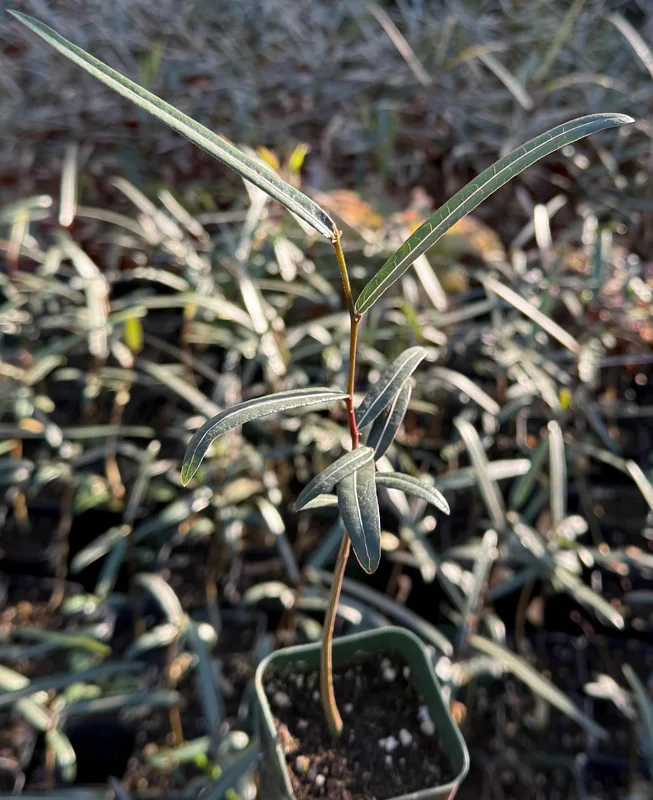
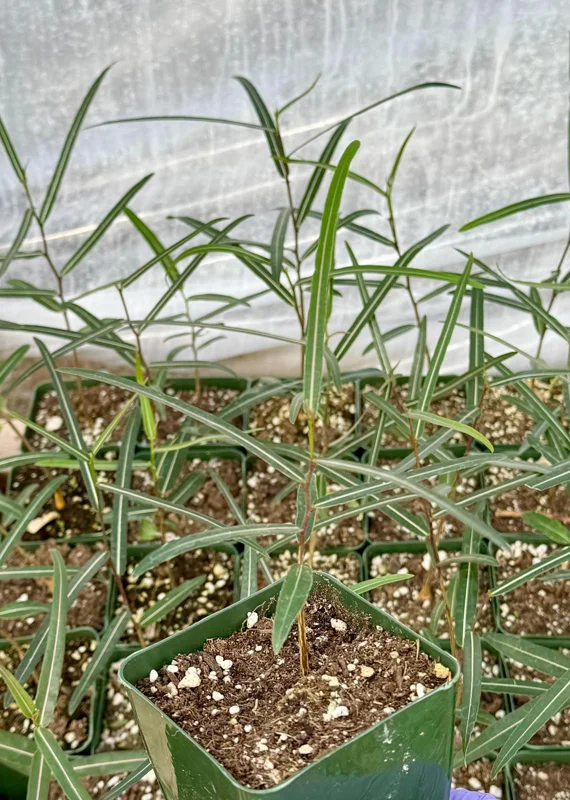
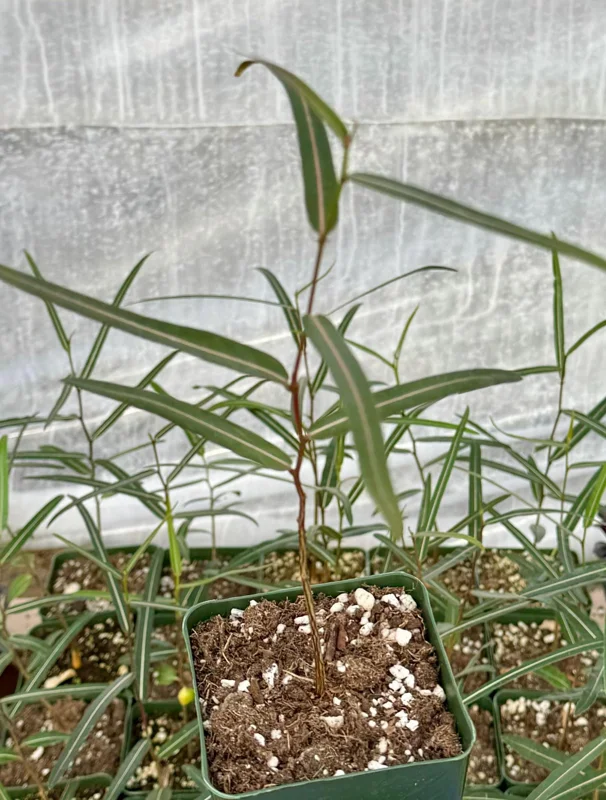
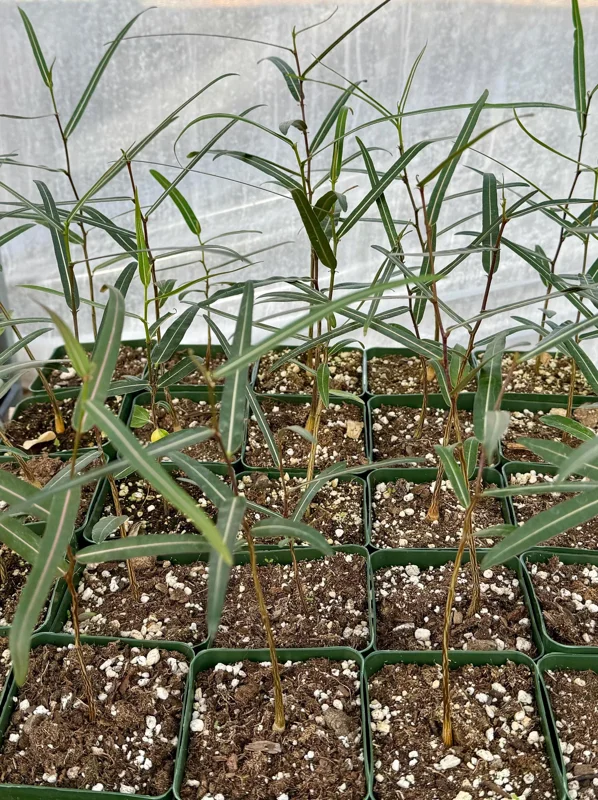
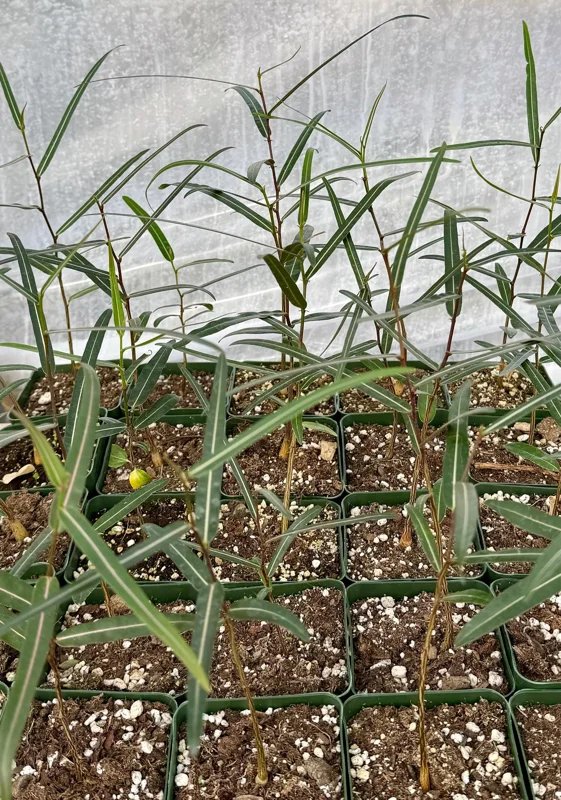
The Queensland Bottle Tree live plant is offered in 2-inch and 4-inch nursery pots, providing a robust start for your gardening project. When young, these plants are compact, making them ideal for growing indoors temporarily or for starting in smaller containers before transplanting. In its natural habitat, the Brachychiton rupestris can reach impressive heights of 60 to 65 feet, with its characteristic swollen trunk developing significantly over many years. However, when cultivated in gardens or larger containers, it typically remains much smaller, often reaching 15-30 feet, making it suitable for a variety of landscape scales. The growth rate is moderate, with the distinctive trunk swelling becoming more pronounced as the tree matures. This tree ships as a healthy, actively growing live plant, ready to be established in its new home. Expect its unique form and drought resilience to become a striking feature in your garden or landscape for decades to come.
Frequently Asked Questions
- Q: How big does this Queensland Bottle Tree live plant get? A: In its native environment, it can reach 60-65 feet tall. However, in cultivation, especially in gardens or containers, it typically grows to a more manageable 15-30 feet, making it suitable for various landscape sizes.
- Q: What size pot does it come in? A: This Queensland Bottle Tree live plant is available in either a 2-inch or 4-inch nursery pot, providing a healthy root system for successful transplanting.
- Q: Is this an indoor or outdoor plant? A: While young plants can be kept indoors in very bright light, the Queensland Bottle Tree live plant is primarily an outdoor tree, thriving in full sun in USDA Zones 9-11. It needs ample space to grow and develop its iconic trunk.
- Q: How much sunlight does it need? A: This tree requires full sun, meaning at least 6-8 hours of direct sunlight per day, to ensure optimal growth and trunk development.
- Q: Is this plant easy to care for? A: Yes, once established, Brachychiton rupestris care is considered low maintenance. Its drought-tolerant nature means it doesn’t require frequent watering, and it’s generally pest and disease resistant. This makes it a great choice for those looking for a unique garden trees that are also resilient.
- Q: What condition will it arrive in? A: Your Queensland Bottle Tree live plant will arrive as a healthy, actively growing specimen, carefully packaged to ensure its safe journey and ready for planting.
- Q: How long until its trunk swells into the ‘bottle’ shape? A: The development of the distinctive bottle-shaped trunk is a gradual process that occurs over many years as the tree matures, becoming more pronounced with age and proper growing conditions.
- Q: Will it survive winter in my zone? A: The Queensland Bottle Tree live plant is hardy in USDA Zones 9-11. If you are in a colder zone, it may need to be grown in a container and brought indoors or protected during winter frosts.
- Q: What’s the minimum temperature it can tolerate? A: Established plants can tolerate light frosts, but young plants and those in colder zones should be protected from temperatures dipping below freezing.
- Q: Is this a good choice for a beginner gardener? A: Given its resilience and relatively low care requirements once established, the Queensland Bottle Tree live plant can be a rewarding choice for beginner gardeners looking for a distinctive and hardy tree. Its bottle tree drought tolerant nature simplifies watering concerns.



Reviews
There are no reviews yet.