Overview
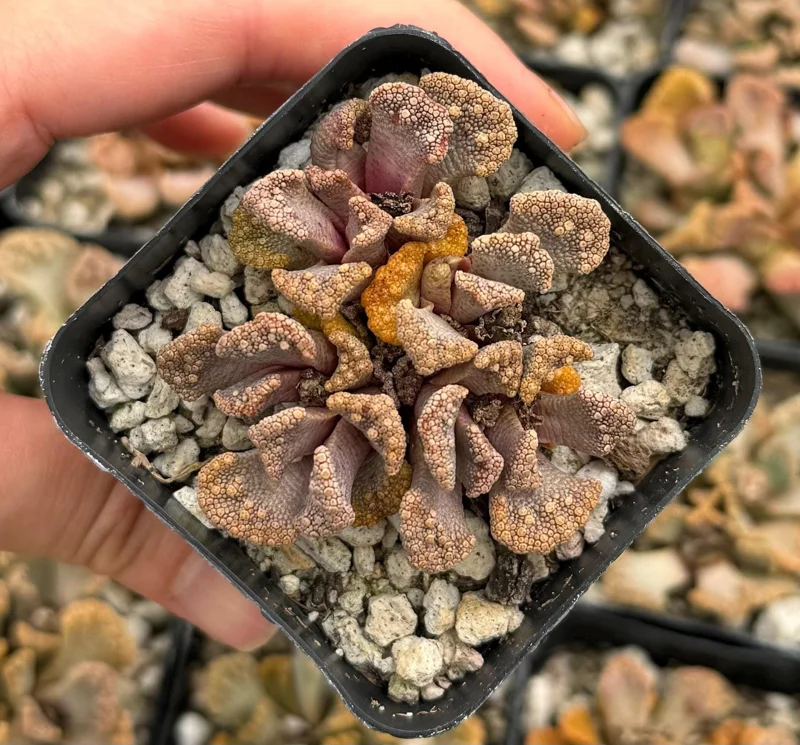
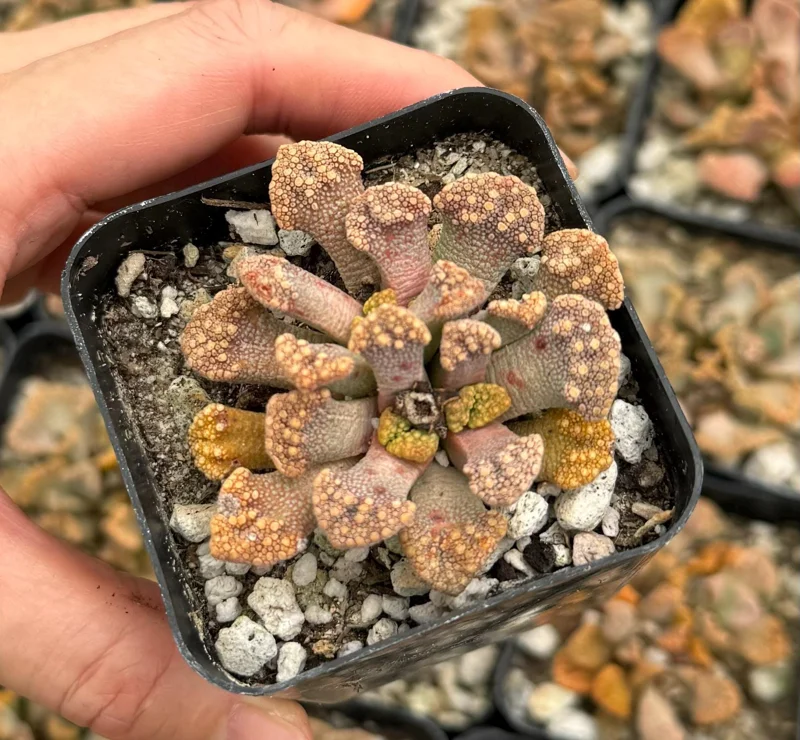
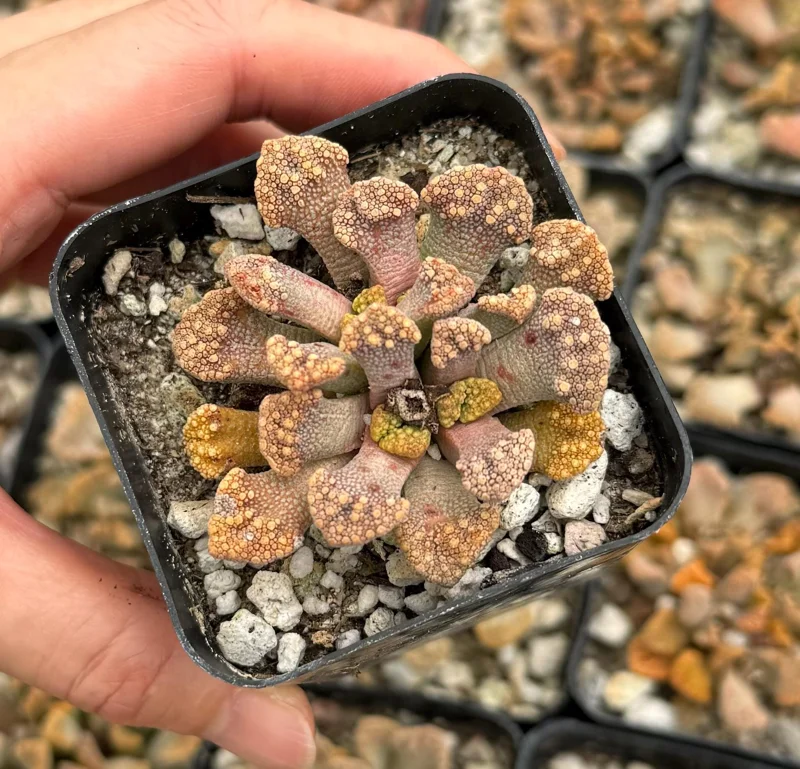
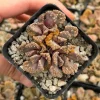
Welcome to the fascinating world of succulents with the Titanopsis calcarea succulent. Commonly known as “Concrete Leaf” or “Jewel Plant,” this extraordinary live plant is a true botanical marvel. Native to the arid landscapes of South Africa, the Titanopsis calcarea succulent is celebrated for its unique appearance, featuring thick, textured leaves that mimic the look of stones or concrete. This natural camouflage helps it blend seamlessly into its rocky native environment. Each individual rosette typically measures about 2-3 inches in diameter, making it a compact and intriguing addition to any indoor garden or succulent collection. Its distinctive aesthetic and hardy nature make it a sought-after rare succulent plant for enthusiasts and novices alike.
This particular offering is for a healthy, vibrant Titanopsis calcarea succulent, ready to thrive in its new home. Its unique foliage, often displaying shades of gray-green with hints of blue, purple, or pink under bright light, provides year-round visual interest. In late fall or winter, this remarkable concrete leaf plant may surprise you with small, daisy-like flowers in cheerful yellow or orange hues, adding a delicate splash of color to its otherwise rugged charm. The concrete leaf plant is a testament to nature’s artistry, offering both beauty and a conversation starter.
Key Benefits
The Titanopsis calcarea succulent offers numerous benefits, making it an excellent choice for various plant enthusiasts. Its unique characteristics contribute to its appeal and ease of care, ensuring a rewarding gardening experience. This is truly a special rare succulent plant to add to your collection.
- Striking Visual Appeal: The primary benefit of the Titanopsis calcarea succulent lies in its extraordinary appearance. Its textured, stone-like leaves provide a unique aesthetic that stands out in any succulent collection, adding a touch of natural artistry.
- Low Maintenance: This plant is incredibly forgiving and requires minimal attention once established. Its drought-tolerant nature means less frequent watering, making it ideal for busy individuals or those new to Titanopsis calcarea care.
- Compact Size: With rosettes typically 2-3 inches in diameter, the jewel plant succulent is perfect for small spaces, windowsills, terrariums, or rock gardens. It doesn’t demand much room, allowing for creative display options.
- Drought-Tolerant: Adapted to arid conditions, the Titanopsis calcarea succulent stores water in its thick leaves, making it highly resilient to dry spells and an excellent choice for water-wise gardening.
- Unique Foliage Coloration: Its gray-green leaves often develop beautiful hues of blue, purple, or pink, especially when exposed to bright light. This natural color variation adds dynamic interest to the concrete leaf plant throughout the year.
- Seasonal Blooms: Enjoy delicate yellow or orange daisy-like flowers during late fall or winter, providing an unexpected burst of color against its muted foliage. This adds another layer of charm to the concrete leaf plant.
- Collector’s Item: As a rare succulent plant, the Titanopsis calcarea is highly prized by collectors. Adding this unique specimen enhances the diversity and value of any succulent assortment.
Plant Care & Growing Tips
Proper care for your Titanopsis calcarea succulent is straightforward, ensuring its continued health and unique beauty. This resilient plant thrives with specific conditions that mimic its natural South African habitat. Providing the right environment will help your concrete leaf plant flourish and display its best coloration. Understanding Titanopsis calcarea care is key to its longevity.
For optimal growth, Titanopsis calcarea succulent requires bright, indirect sunlight. While it can tolerate direct sunlight, particularly during the cooler morning or late afternoon hours, prolonged exposure to intense midday sun might cause stress. If grown indoors, a south-facing window with some protection from harsh afternoon rays is ideal. For outdoor placement, choose a spot that receives ample bright light but offers some shade during the hottest parts of the day. Good air circulation is also beneficial for preventing fungal issues.
Watering is perhaps the most critical aspect of Titanopsis calcarea care. This succulent is highly susceptible to root rot if overwatered. Always allow the soil to dry out completely between waterings. When you do water, do so thoroughly until water drains from the bottom of the pot, then wait until the soil is bone dry again before the next watering. Reduce watering significantly during its dormant period in the summer. The ideal soil for your jewel plant succulent is a well-draining mix, such as a specialized cactus or succulent potting mix, often containing perlite, pumice, or coarse sand to enhance drainage. Repotting is rarely needed due to its slow growth, but if necessary, do so in spring using fresh, well-draining soil. Fertilize sparingly, if at all, during the growing season with a diluted succulent fertilizer.
Size & Details
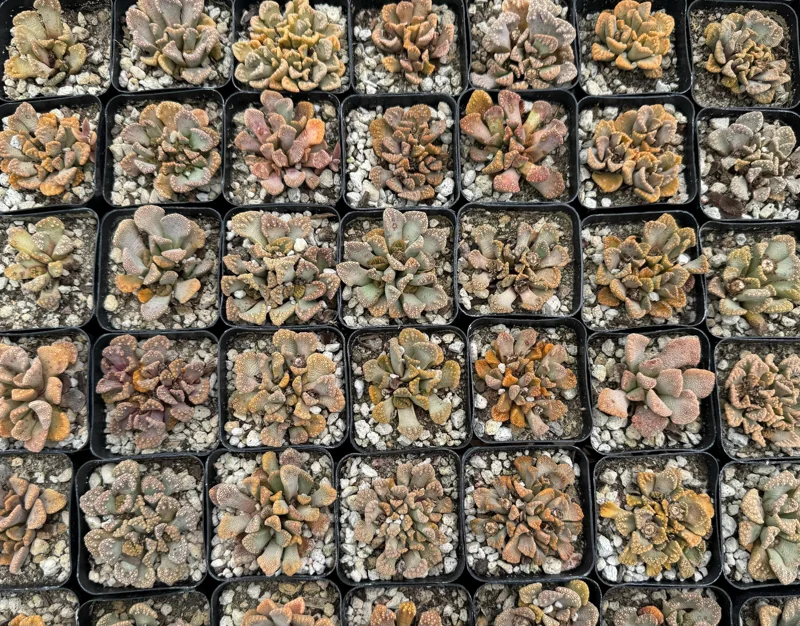
This offering features a healthy Titanopsis calcarea succulent, typically cultivated in a 2 inch pot. As a slow-growing plant, individual rosettes will generally reach about 2-3 inches in diameter, maintaining a compact and manageable size perfect for windowsills, desks, or integrated succulent arrangements. When shipped, the plant will be carefully packaged to ensure its safe arrival, often in its nursery pot with well-draining soil, ready for you to place in your desired location or decorative planter. Its mature size makes it an excellent choice for those seeking a unique, smaller succulent that doesn’t outgrow its space quickly.
The growth rate of the rare succulent plant is considered slow, meaning it will retain its charming, small stature for a long time without requiring frequent repotting. This also means the distinctive texture and coloration of its leaves will develop beautifully over time. Expect the plant to arrive well-rooted and established, providing an instant touch of exotic beauty to your home or garden. Its robust nature and unique appearance make it a truly special addition to any collection, enhancing any space with its unique form.
Frequently Asked Questions
- Q: How big does this Titanopsis calcarea succulent get? A: The Titanopsis calcarea succulent is a compact grower. Individual rosettes typically reach about 2-3 inches in diameter, making it an ideal choice for small spaces and detailed arrangements.
- Q: Is this an indoor or outdoor plant? A: The concrete leaf plant can thrive both indoors and outdoors. If grown outdoors, ensure it’s in a climate suitable for succulents (USDA zones 9-11) and protected from extreme cold or intense, prolonged direct sun. Indoors, it needs bright, indirect light.
- Q: How much sunlight does the jewel plant succulent need? A: It requires bright, indirect sunlight. It can tolerate some direct sun, especially morning or late afternoon sun, but should be protected from harsh midday sun to prevent scorching.
- Q: Is this plant easy to care for? A: Yes, the Titanopsis calcarea succulent is considered low-maintenance. Its primary needs are bright light and very infrequent watering, making it suitable for both beginners and experienced succulent enthusiasts. This makes Titanopsis calcarea care relatively simple.
- Q: What condition will the rare succulent plant arrive in? A: Your plant will arrive healthy and well-packaged, typically in its nursery pot with well-draining soil. We take great care to ensure it reaches you in excellent condition, ready to be enjoyed.
- Q: How often should I water my Titanopsis calcarea succulent? A: Water sparingly. Allow the soil to dry out completely between waterings. Overwatering is the most common cause of problems for this plant, so err on the side of underwatering.
- Q: What kind of soil is best for Titanopsis calcarea care? A: A well-draining soil mix is essential. A specialized cactus or succulent potting mix, often amended with perlite, pumice, or coarse sand, is highly recommended to prevent root rot.
- Q: When is the best time to repot this succulent? A: Due to its slow growth, repotting is rarely needed. If necessary, the best time to repot is in the spring, just before its main growing season begins.
- Q: Will my concrete leaf plant flower? A: Yes, in late fall or winter, the Titanopsis calcarea succulent produces small, daisy-like flowers that are typically yellow or orange, adding a beautiful contrast to its unique foliage.
- Q: Is the Titanopsis calcarea succulent pet-safe? A: While generally considered non-toxic, it’s always best to keep plants out of reach of pets to prevent any potential irritation or ingestion.





Reviews
There are no reviews yet.