Overview
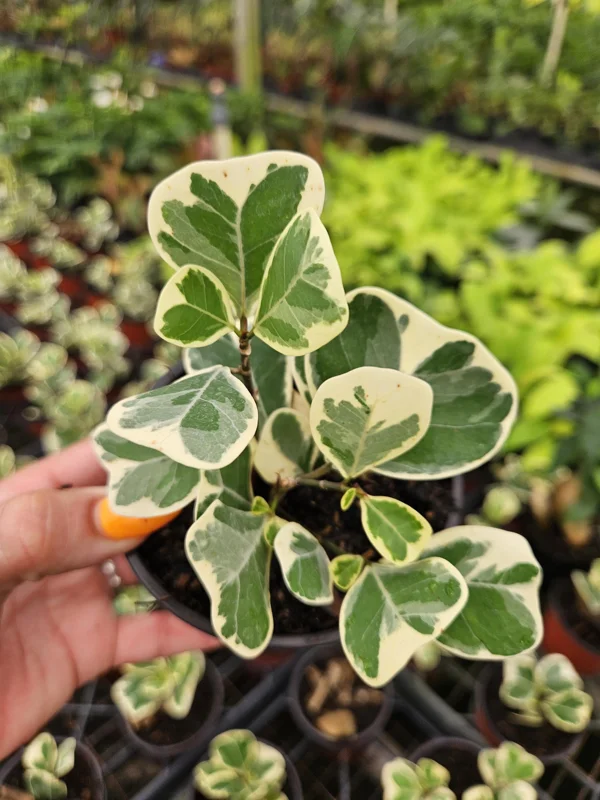
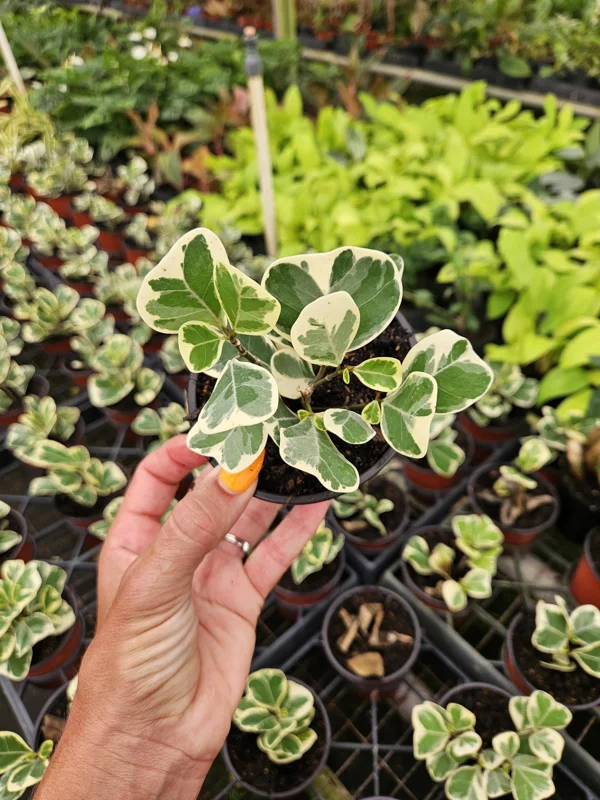
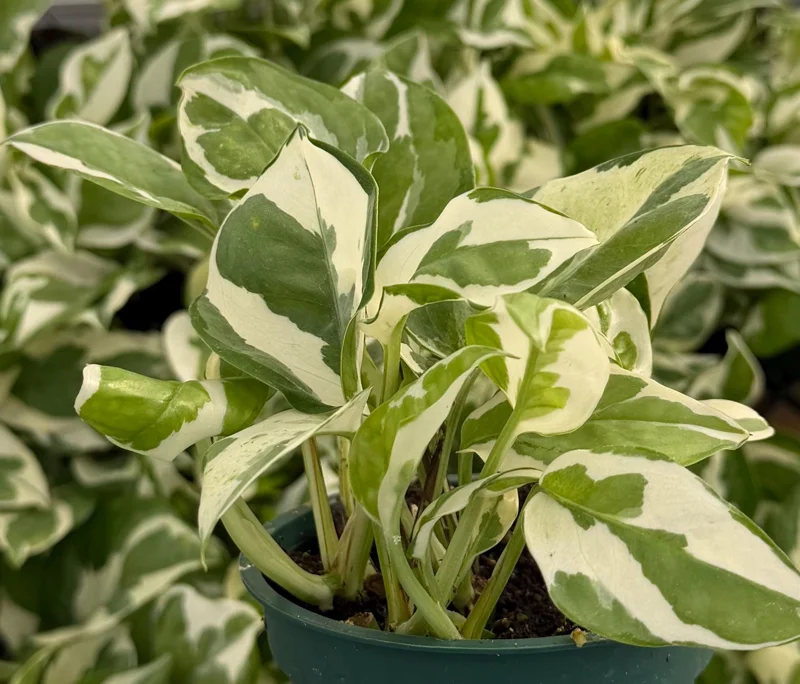
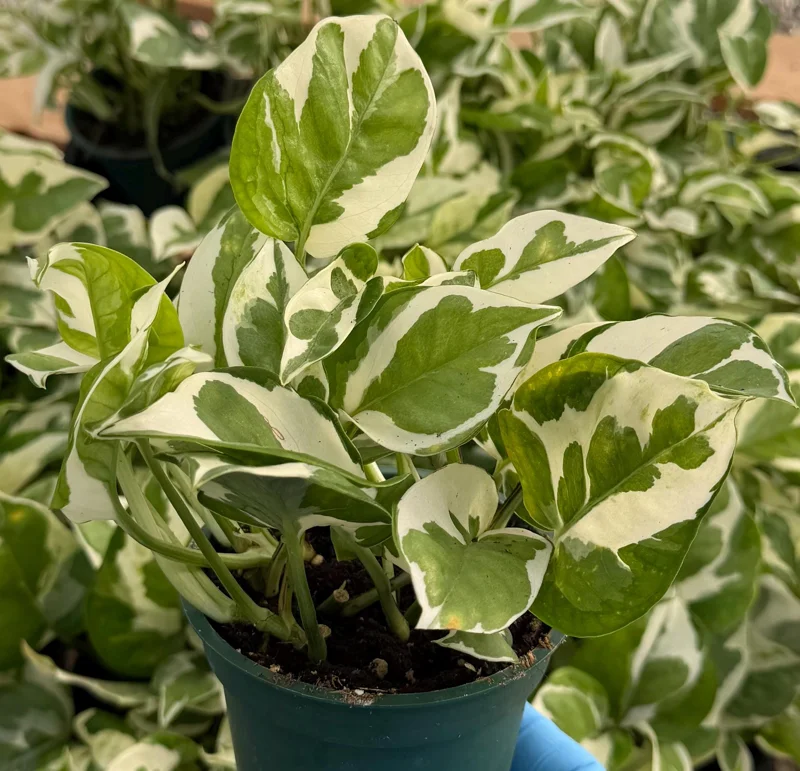
Elevate your indoor plant collection with the exquisite variegated ficus triangularis, a truly unique and visually striking specimen. This rare tropical houseplant is celebrated for its distinctive heart-shaped leaves, beautifully edged with creamy white variegation that contrasts elegantly against the deep green centers. Often referred to simply as Ficus Triangularis ‘Variegata’, this plant is a collector’s dream, not commonly found in typical garden centers. Its compact and upright growth habit makes it an ideal choice for adding a touch of sophisticated greenery to smaller spaces, such as desks, shelves, or bright corners. As a slow-growing plant, it maintains its charming size and striking appearance with minimal fuss, making it a rewarding addition for both seasoned plant enthusiasts and those new to the world of rare indoor plants.
The Ficus genus is renowned for its diverse species, and the variegated ficus triangularis stands out with its architectural form and captivating foliage. Each leaf is a miniature work of art, showcasing nature’s precision in its stunning two-toned pattern. This live plant arrives ready to thrive in your home, bringing a vibrant, natural elegance that enhances any interior design. Its unique aesthetic and manageable size ensure it becomes a focal point and conversation starter in any room.
Key Benefits
The variegated ficus triangularis offers a multitude of benefits, making it an outstanding choice for anyone looking to enrich their living or working space with a touch of botanical artistry. Its unique characteristics contribute to both aesthetic appeal and a fulfilling plant ownership experience.
Rare & Collectible Foliage: This is not your everyday houseplant. The variegated ficus triangularis is considered a rare find, highly sought after by collectors for its unusual heart-shaped leaves and stunning creamy-white variegation. Owning one means possessing a unique botanical treasure.
Exceptional Aesthetic Appeal: The striking contrast of deep green and creamy white on its triangular leaves creates a captivating visual display. This plant adds a sophisticated and elegant touch to any room, serving as a natural piece of living art that complements various decor styles.
Compact & Versatile Growth: With its naturally compact and upright growth habit, this indoor ficus plant is perfectly suited for smaller spaces. It thrives as a desk plant, on shelves, or as an accent in bright corners, making it incredibly versatile for urban living or limited areas.
Long-Lived & Hardy: Like many Ficus varieties, the variegated ficus triangularis is a relatively hardy and long-lived plant when provided with proper care. It offers years of beauty and enjoyment, growing steadily and rewarding your efforts with lush, vibrant foliage.
Engaging for Plant Enthusiasts: For those who appreciate the intricacies of plant care and growth, this plant provides a rewarding experience. Observing its slow, steady development and maintaining its vibrant variegation can be a deeply satisfying endeavor for any variegated plant collector.
Air Purifying Qualities: Like other Ficus plants, the Variegated Ficus Triangularis contributes to improved indoor air quality by filtering common airborne toxins, creating a healthier and fresher environment in your home or office.
Plant Care & Growing Tips
Caring for your variegated ficus triangularis is straightforward once you understand its basic needs, ensuring it remains a vibrant and healthy addition to your home. Providing the right conditions will help maintain its stunning variegation and promote steady growth. This indoor ficus plant thrives in environments that mimic its tropical origins, but it is also adaptable to typical household conditions with a few considerations.
For optimal health and to preserve its distinctive creamy-white margins, the variegated ficus triangularis requires bright, indirect light. Avoid direct, harsh sunlight, which can scorch its delicate leaves and fade the variegation. An east-facing window or a few feet away from a south or west-facing window with sheer curtains would be ideal. Consistent watering is crucial; allow the top 1-2 inches of soil to dry out completely between waterings. Overwatering can lead to root rot, so ensure your pot has adequate drainage. Conversely, allowing the soil to dry out too much can cause leaf drop. A good way to gauge is to lift the pot or test the soil moisture with your finger.
This tropical beauty enjoys average to slightly higher household humidity levels. While it can tolerate typical indoor humidity, providing extra humidity through a pebble tray, a humidifier, or occasional misting can encourage more robust growth and prevent brown leaf tips. Maintain a warm environment, ideally between 65-85°F (18-29°C), and protect it from cold drafts, which can stress the plant. Use a well-draining potting mix that retains some moisture but doesn’t become waterlogged. Fertilize sparingly during the growing season (spring and summer) with a balanced liquid fertilizer diluted to half strength. Repotting is generally only needed every 2-3 years, or when the plant becomes root-bound, to refresh the soil and provide room for growth. Regular dusting of leaves will also ensure maximum light absorption and keep your plant looking its best. Understanding ficus triangularis care is key to a thriving plant.
Size & Details
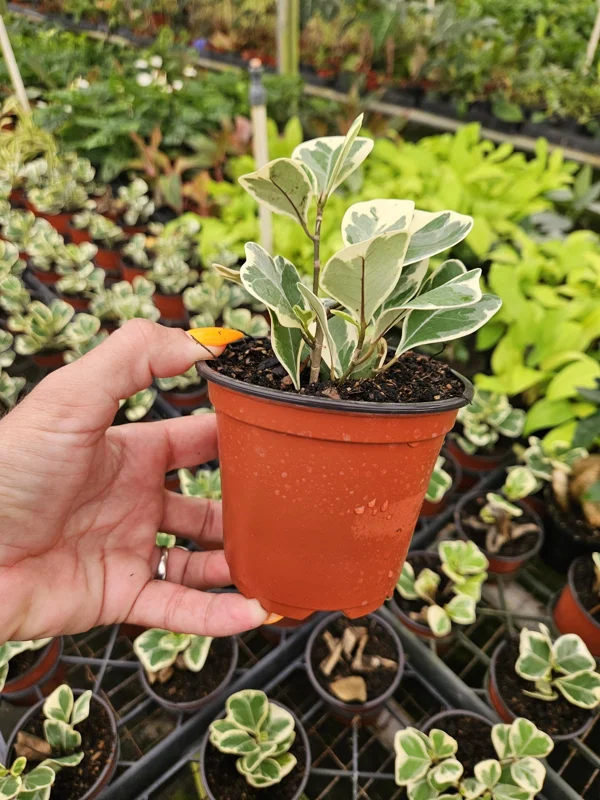
This variegated ficus triangularis live plant is typically supplied in a 4-inch nursery pot, providing a well-established root system ready for its new home. At the time of shipping, plants generally stand between 6 to 10 inches tall from the base of the pot to the top of the foliage, though exact height can vary slightly. This compact size makes it an excellent choice for immediate display on windowsills, bookshelves, or as a charming desk companion. The slow-growing nature of this plant means it will maintain a manageable size for an extended period, gradually developing into a small, upright specimen. Expect a moderate growth rate, adding a few inches in height per year under optimal conditions. The unique triangular, heart-shaped leaves with their distinct variegation are the primary ornamental feature, creating a dense and attractive canopy. This plant is shipped as a potted live plant, ensuring minimal transplant shock and a smooth transition to your indoor environment.
Frequently Asked Questions
Q: How big does this variegated Ficus Triangularis get? A: The variegated ficus triangularis is a slow-growing plant. In typical indoor conditions, it usually reaches a mature height of 2-4 feet, though it can be pruned to maintain a desired size. Its compact nature makes it ideal for smaller spaces.
Q: Is this an indoor or outdoor plant? A: This is primarily an indoor ficus plant. While it can be placed outdoors in warm, humid climates (USDA zones 10-11) during frost-free periods, it must be brought inside when temperatures drop below 50°F (10°C) as it is a rare tropical houseplant.
Q: How much sunlight does it need? A: The variegated ficus triangularis thrives in bright, indirect light. Direct, intense sunlight can burn its variegated leaves. An east-facing window or a spot a few feet away from a south or west-facing window is usually perfect for optimal growth and variegation.
Q: Is this plant easy to care for? A: While not extremely difficult, this plant requires consistent care regarding light, watering, and humidity. It’s considered moderately easy for those with some plant experience, making ficus triangularis care a rewarding hobby.
Q: What condition will the plant arrive in? A: Your variegated ficus triangularis will arrive as a healthy, well-rooted live plant in a 4-inch nursery pot, carefully packaged to ensure its safe journey. It will be ready to be placed in your home and begin thriving.
Q: What kind of soil is best for this indoor ficus plant? A: A well-draining, airy potting mix is best. A blend formulated for houseplants or a mix of peat, perlite, and pine bark works well to ensure proper drainage while retaining adequate moisture for your rare tropical houseplant.
Q: Is the variegated Ficus Triangularis pet-safe? A: No, Ficus plants, including the variegated ficus triangularis, are considered toxic to pets if ingested. The sap can cause irritation, so it’s best to keep it out of reach of curious animals.
Q: How often should I water my variegated ficus triangularis? A: Water when the top 1-2 inches of soil feel dry to the touch. This typically means watering once every 7-10 days, but it can vary based on light, humidity, and pot size. Always check the soil before watering to avoid over or under-watering.
Q: Why is it called a variegated plant collector’s item? A: This plant is highly prized by a variegated plant collector due to its unique and consistent variegation pattern, combined with its relatively slow growth and less common availability, making it a desirable and distinctive addition to specialized collections.
Q: Does this plant need high humidity? A: While it can tolerate average household humidity, the variegated ficus triangularis appreciates higher humidity. If your home is very dry, consider using a humidifier or placing the pot on a pebble tray filled with water to boost local humidity around the plant.








Reviews
There are no reviews yet.