Overview
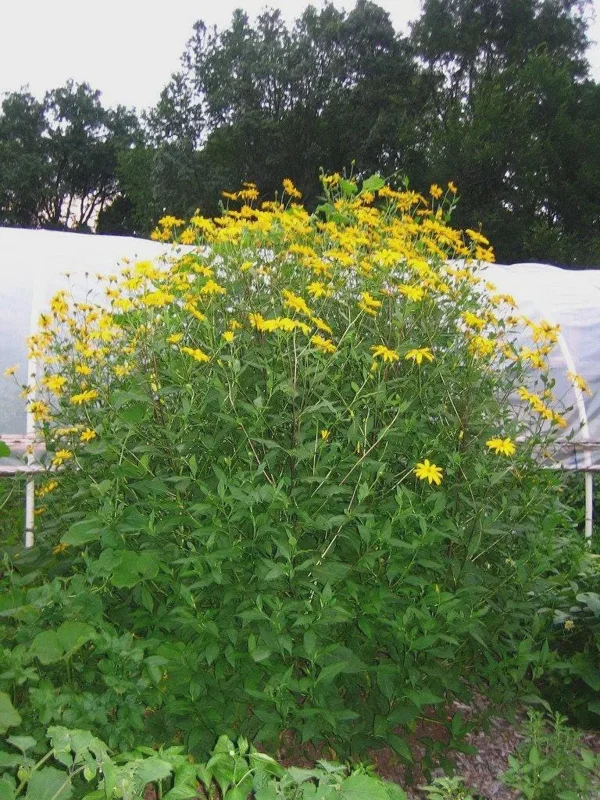
Discover the joy of cultivating your own nutritious root vegetables with these premium jerusalem artichoke tubers. Also widely known as sunchokes or sunroot, these tubers offer a unique, slightly sweet, and nutty flavor that can be enjoyed raw, roasted, or boiled. Our organic Stampede variety is celebrated for its vigorous growth and impressive early maturity, meaning you can enjoy a bountiful harvest sooner than with other types. Perfect for both experienced gardeners and those new to growing edibles, these tubers are a fantastic addition to any kitchen garden. The Jerusalem artichoke plant (Helianthus tuberosus) is a hardy perennial sunflower, growing tall and producing beautiful yellow flowers, making it an attractive as well as productive plant.
This offering provides you with organic sunchokes, ensuring you’re planting a healthy, chemical-free start to your crop. The Stampede variety is particularly valued for its reliability and consistent yields, making it a favorite among home growers. These tubers are not only a culinary delight but also packed with nutrients, including inulin, a beneficial prebiotic fiber. Planting these tubers is an investment in both your garden’s beauty and your family’s health, providing fresh, homegrown produce right from your backyard.
Key Benefits
Growing jerusalem artichoke tubers offers a multitude of advantages, from their ease of cultivation to their health benefits and culinary versatility. These tubers are a simple yet rewarding crop for any gardener.
- Easy to Grow: Growing jerusalem artichokes is remarkably straightforward. They are resilient and adaptable plants, thriving in a variety of soil conditions and requiring minimal maintenance once established. This makes them an excellent choice for beginners or those seeking a low-effort, high-reward crop.
- Nutrient-Rich Harvest: Sunchokes are a fantastic source of inulin, a dietary fiber that supports gut health. They are also rich in vitamins and minerals, offering a healthy alternative to potatoes with a lower glycemic index.
- Early Maturing Variety: The Stampede variety is specifically bred for its early maturing characteristics, allowing you to enjoy your harvest weeks before other types. This means a quicker turnaround from planting to plate, maximizing your gardening season.
- Versatile Culinary Use: The distinct nutty and slightly sweet flavor of these organic sunchokes makes them incredibly versatile in the kitchen. Enjoy them raw in salads, roasted with herbs, puréed into soups, or stir-fried.
- Attractive Garden Addition: Beyond their edible tubers, Jerusalem artichoke plants grow tall with bright yellow, sunflower-like blooms in late summer to fall, adding a beautiful, natural touch to your garden landscape.
- Perennial Production: Once planted, Jerusalem artichokes are perennial, meaning they will return year after year. A few tubers left in the ground will ensure a continuous supply without the need for annual replanting.
- Sustainable Food Source: As a hardy and prolific crop, jerusalem artichoke tubers offer a sustainable and self-sufficient food source, reducing reliance on store-bought produce.
Plant Care & Growing Tips
Caring for your jerusalem artichoke tubers is relatively simple, as these plants are known for their hardiness and resilience. To ensure a successful harvest, select a sunny location in your garden that receives at least 6-8 hours of direct sunlight daily. While they tolerate a range of soil types, they thrive best in well-draining, fertile soil with a slightly acidic to neutral pH (6.0-7.0). Amend heavy clay soils with compost or organic matter to improve drainage and aeration. Plant the tubers about 4-6 inches deep and 12-18 inches apart, in rows spaced 3 feet apart. This spacing allows for ample growth and prevents overcrowding.
Watering is crucial during dry spells, especially when the plants are young and when the tubers are forming in late summer and early fall. Aim for consistent moisture, but avoid waterlogging the soil. Once established, Jerusalem artichokes are quite drought-tolerant. Fertilization is generally not heavily required in rich soil, but a balanced organic fertilizer applied in early spring can boost growth. Keep the area around the plants free of weeds, as competition can reduce yield. As the plants grow tall, they may benefit from staking or support, especially in windy areas. Harvesting typically begins after the first hard frost, which helps sweeten the tubers. Dig them up carefully to avoid damaging the tubers, and be sure to leave a few behind for next year’s crop, as they are a perennial plant.
Monitoring for pests and diseases is usually minimal, as organic sunchokes are quite resistant. Slugs and snails might be an issue for young shoots, and occasionally powdery mildew can appear on leaves in humid conditions. Ensure good air circulation to prevent fungal issues. This early maturing variety will reward you with a delicious harvest with proper care.
Size & Details
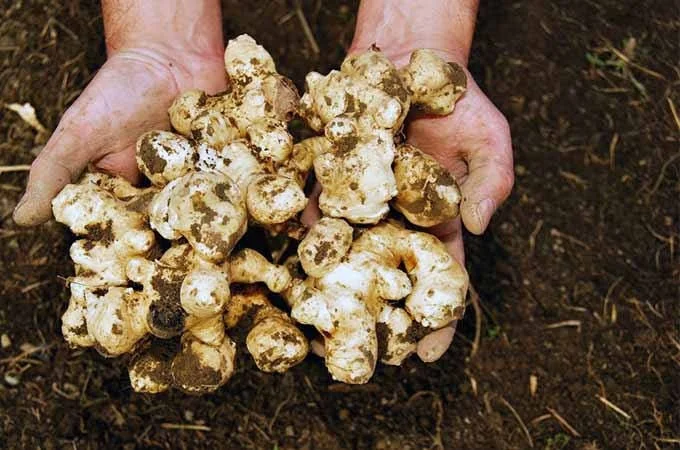
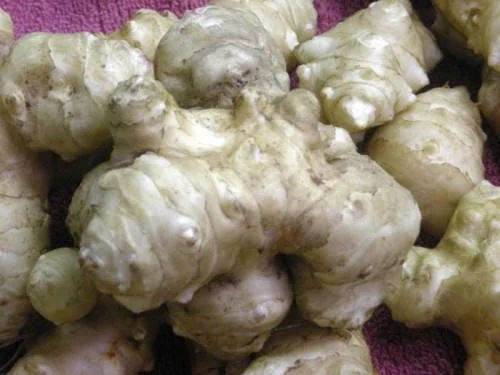
This offering includes 1 Tuber of the Stampede variety of organic sunchokes, ready for planting. Each tuber is carefully selected for quality and viability, ensuring a strong start to your garden. These tubers are the reproductive part of the Jerusalem artichoke plant, which typically grows to an impressive height of 6-10 feet (1.8-3 meters) with a spread of 2-4 feet (0.6-1.2 meters) in a single growing season. The tubers themselves vary in size and shape, generally resembling ginger roots, and will multiply underground.
The Stampede variety is an early maturing type, meaning you can expect to harvest your sunchokes earlier in the fall compared to other varieties. This accelerated growth cycle is a significant advantage for gardeners in regions with shorter growing seasons or those eager for a quicker yield. Tubers are shipped dormant and should be planted in early spring after the danger of hard frost has passed. They are typically harvested after the first hard frost in autumn, which enhances their flavor. Each tuber has the potential to produce multiple new tubers, ensuring a continuous supply for years to come.
Frequently Asked Questions
- Q: How big does this plant get? A: The jerusalem artichoke tubers will grow into tall plants, typically reaching heights of 6 to 10 feet (1.8 to 3 meters) during a single growing season, with a spread of 2 to 4 feet.
- Q: Is this an indoor or outdoor plant? A: Jerusalem artichokes are primarily an outdoor garden plant. They require full sun and space to grow to their full potential and produce a good yield of tubers.
- Q: How much sunlight does it need? A: For optimal growth and tuber production, organic sunchokes need full sun, meaning at least 6 to 8 hours of direct sunlight per day.
- Q: Is this plant easy to care for? A: Yes, Jerusalem artichokes are known for being very easy to grow and maintain, making them an excellent choice for beginner gardeners and those looking for a low-maintenance crop.
- Q: What condition will it arrive in? A: Your jerusalem artichoke tubers will arrive as dormant, healthy tubers, ready for planting in your garden. They are carefully packaged to ensure their viability during transit.
- Q: When is the best time to plant? A: The best time to plant these tubers is in early spring, after the last danger of a hard frost has passed and the soil has begun to warm up.
- Q: How long until it blooms? A: The plants will typically grow throughout the summer and produce attractive, sunflower-like blooms in late summer to early fall, usually before the tubers are ready for harvest.
- Q: What’s the minimum temperature it can tolerate? A: Jerusalem artichokes are very cold-hardy and can tolerate winter temperatures well below freezing, especially if the tubers are left in the ground and mulched. They are generally hardy in USDA Zones 3-9.
- Q: Can I use organic sunchokes in cooking? A: Absolutely! These tubers are highly versatile and delicious. They can be eaten raw in salads, roasted, boiled, fried, or puréed into soups.
- Q: Is this early maturing variety suitable for all climates? A: While the early maturing Stampede variety is adaptable, it performs best in temperate climates with a good growing season. Its early maturity is particularly beneficial in regions with shorter summers.







Reviews
There are no reviews yet.