
Plant Care Expert Guides
Vinca Minor (Periwinkle) Guide: The Ultimate Evergreen Ground Cover for Beginners
May
If you’ve been searching for a plant that can transform a patchy, weed-ridden eyesore of a backyard into a lush, vibrant carpet of green, look no further. Vinca Minor, affectionately known as Periwinkle or Creeping Myrtle, is about to become your new garden best friend.
These hardy trailing vines are the ultimate problem-solvers of the plant world. Once they tuck themselves into the soil, they reward you with a dense mat of glossy, dark green leaves that stay vibrant all year long. And just when you think they couldn’t get any better, spring arrives, and the entire green carpet explodes with thousands of pinwheel-shaped, lavender-blue flowers that look like tiny stars scattered across the ground.
Beyond their looks, Vinca Minor is famously tough. Got a steep slope where lawnmowers fear to tread? A dark, shady spot under a massive oak tree where grass goes to die? This plant looks at these “impossible” garden spots and says, “Hold my water.”
In this guide, I’ll walk you through everything you need to know to establish your own gorgeous periwinkle carpet, from choosing the right spot to keeping it in check. Let’s get your dirt covered and your weekends back!
What is Vinca Minor (Periwinkle)?
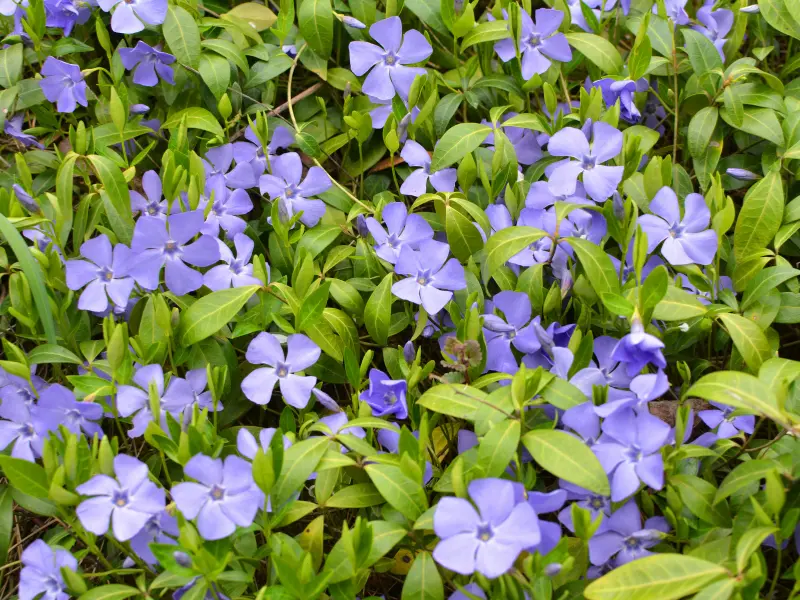
Vinca Minor has a long history as a beloved ground cover, and it’s currently having a massive moment for modern, low-maintenance yards. Why? Because it’s practically bulletproof.
Unlike grass, which acts like a total “diva” about needing constant mowing, fertilizing, and perfectly timed watering, Periwinkle is completely easygoing. It offers a dense, weed-smothering canopy that looks manicured without the actual chore of manicuring it.
A Quick Safety Note: While it’s beautiful, Vinca Minor is toxic if ingested by pets or humans. Think of it as a “look, don’t eat” plant—keep it in the landscape and out of the salad bowl!
Best Varieties for Home Landscapes
Choosing the right cultivar can add a ton of personality to your yard. Here are my top three favorites that actually deliver results:
Bowles’ Variety (La Grave): This is my absolute top pick for beginners. It features slightly larger, deeper blue flowers and excellent clump-forming habits.
Illumination: If you want to brighten up a dark corner, this is the one. It features stunning, variegated gold-and-green leaves that look like sunshine trapped in the shade.
Alba: For a crisp, clean, cottage-garden look, this variety offers pure white blossoms against that classic, deep-green foliage.
You may like to read: Top 8 Ground Cover Plants to Prevent Weeds for a Maintenance-Free Yard
Planting Vinca Minor

Choosing the Perfect Spot
While many ground covers crave 12 hours of blazing sun, Vinca Minor is much more refined. It actually prefers partial shade to full shade. Think of it as a “forest floor” plant; it thrives in the dappled light beneath large trees or along the north side of a fence.
Can it handle full sun? Yes, but it tends to get a bit pale and sunburned in blistering heat, and you’ll have to water it much more frequently.
Soil Requirements
Periwinkle loves “loamy, rich soil” which is a crumbly, nutrient-dense mix that holds moisture but breathes easily. It prefers a slightly acidic to neutral pH (6.0 to 7.0).
If your backyard soil feels like concrete clay, don’t panic. Just mix in some rich organic compost or leaf mold before planting. The one thing Vinca truly hates is “wet feet.” If you plant it in a swampy spot where water stands for hours after a storm, the roots will drown and rot.
How to Plant Periwinkle Step-by-Step
I remember helping my neighbor plant her first flat of Vinca plugs along a steep, eroded hill last spring. She was worried they were too small to survive. Spoiler alert: they took over the hill in no time!
Timing is Everything: Early spring or early fall is your golden window. Planting during these cooler seasons allows the roots to get comfortable before the stress of summer heat or winter freezes.
Give Them Space: Space your plugs about 8 to 12 inches apart. It might look a bit sparse at first, but don’t worry, they spread via trailing runners and will fill in the gaps faster than you think.
Plant at Container Depth: Dig a small hole and place the plug so the top of the root ball is flush with the surrounding soil.
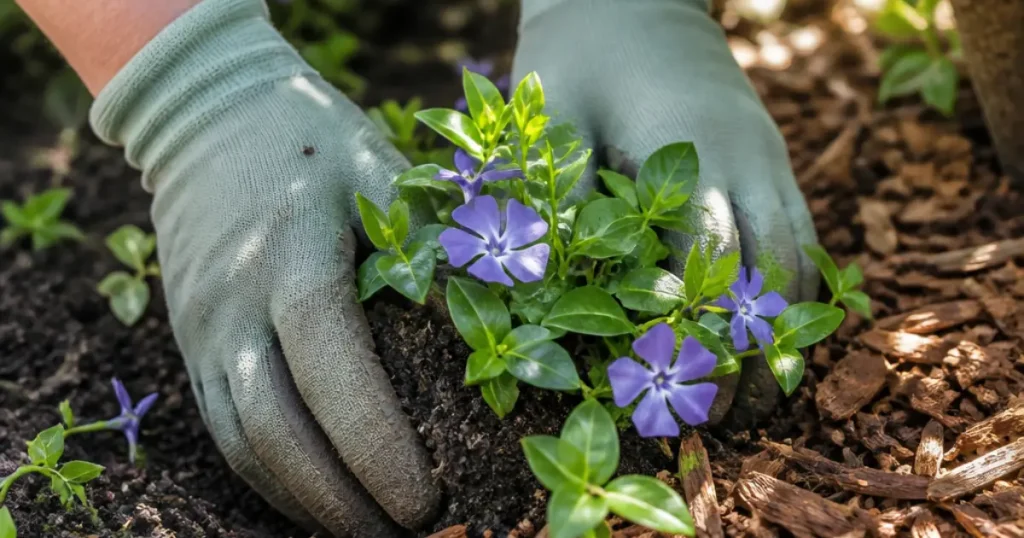
The Cozy Blanket: Once they are in the ground, give them a long, slow drink and top the surrounding soil with a layer of bark mulch. Mulch acts like a cooling blanket, keeping weeds down while the Vinca establishes its empire.
Caring for Your Evergreen Carpet
Watering for Strong Roots

During their first year in the ground, your new plants need a little hand-holding. Aim for about an inch of water per week to help those trailing roots dig deep. My rule of thumb? Stick your finger two inches into the soil—if it feels bone-dry, it’s time to turn on the sprinkler. Once established, Vinca is incredibly drought-tolerant and can usually survive on rainfall alone.
Feeding
Keep it simple. You don’t need fancy, expensive chemicals. Every spring, I like to scatter a light layer of well-balanced organic fertilizer or compost over the area right before a rainstorm. This gives them a nice little energy boost for their spring bloom.
Pruning
Don’t be afraid of the shears! Because Vinca Minor is a vigorous grower, it can occasionally try to peek into nearby flowerbeds or over sidewalks.
To keep it looking tidy, follow the “Once-a-Year Trim” rule. In late winter or very early spring—before the new growth kicks in—give the patch a haircut. For large areas, you can actually set your lawnmower to its highest blade setting and mow right over the bed. This snaps off old, tired leaves and encourages a thicker, tighter carpet filled with fresh blooms.
Propagating Vinca Minor
Sharing Vinca with friends or expanding your own patches is laughably easy because these vines are naturally hardwired to multiply.
The easiest way is through division. In early spring, look for areas where the trailing stems have touched the dirt and formed new roots. Simply slice through the stem with a sharp trowel, dig up the newly rooted clump, and move it to its new “apartment.”
Alternatively, you can take 4- to 6-inch stem cuttings in early summer. Strip the bottom leaves, pop them into a glass of water on your windowsill, and you’ll see fresh roots sprouting in just a few weeks.
Potting and Repotting Vinca Minor

The Container Rules: Since its home is limited, ensure you use a pot with excellent drainage holes. Pack it with a high-quality, free-draining potting mix blended with a handful of compost.
Repotting Time: Every 2 to 3 years, Vinca will likely become rootbound, sending its roots circling around the pot like a tangled ball of yarn. When this happens, it’s time for a “spa treatment.” In early autumn, gently slide the plant out, trim the outer tips of the roots to wake them up, and move it up to a pot that is one size larger. Fill in with fresh soil to give it a nice nutrient buffet for the coming season.
Overwintering
One of the best features of Vinca Minor is that it is a champion winter warrior. It laughs at deep freezes and heavy snow, keeping its green foliage intact through the coldest months of USDA zones 4 through 9.
If your Vinca is in the ground, you don’t need to lift a finger—nature has it covered. However, if you are growing Vinca in patio pots, the roots are much more vulnerable to freezing temperatures because they lack the insulation of the earth. Before the first hard freeze hits, either bury the container in the ground up to its rim or move the pot into an unheated garage or a sheltered porch to protect it from harsh winter winds.
How to Manage Its Spread
Let’s be real: Vinca Minor’s greatest strength—its ability to carpet the ground quickly—can also become its greatest annoyance if it decides to invade your favorite flower beds or escape into nearby natural woodlands.
To keep your Periwinkle a polite neighbor rather than a backyard bully, you need a clear boundary plan:
Install Hard Edging: The best defense is a good barrier. Install plastic, metal, or concrete landscape edging that goes at least 4 to 6 inches deep into the soil. This stops the underground runners from sneaking into forbidden territory.
The Buffer Zone: Keep a 1-foot buffer strip of bare mulch or turf grass between your Vinca patch and your delicate perennials.
Active Patrol: Once or twice a summer, grab your garden shears or a string trimmer and brutally cut back any runners trying to cross the line. If it escapes into the lawn, simply mowing over the edges regularly will keep it perfectly contained.
Troubleshooting Common Problems
Pests and Diseases
Phomopsis Blight: If you notice entire shoots turning black and dying back to the ground in spring, you’re likely dealing with blight. Snip off the infected stems, throw them in the trash (not the compost pile!), and clear away old leaves to improve airflow.
Aphids: Occasionally, these tiny sap-suckers will throw a party on the new growth. Usually, a sharp blast from the garden hose is enough to knock them off their feet.
The Yellow Leaf Mystery
If your beautiful green carpet starts turning a sickly yellow, the plant is trying to tell you something. Usually, it means one of two things: either it’s getting too much direct, blistering sunlight, or the soil is holding too much water. Adjust your watering schedule or add organic matter to improve drainage, and the plant should snap right back.
Read more:
- How to Revive Plants After Shipping Shock: 5 Expert Tips
- Is My Plant Dead or Just Shipping Stressed? (How to Tell the Difference)
Frequently Asked Questions (FAQs)
1. Is Vinca Minor invasive? While it is a vigorous grower and can spread aggressively into adjacent lawns or garden beds if ignored, it is much tamer and easier to control than its big brother, Vinca Major. A simple annual edging will keep it right where you want it.
2. How fast does Vinca Minor spread? In its first year, it spends most of its energy building a root system. By year two and three, it kicks into high gear, with runners growing up to 1 to 2 feet per season until the ground is fully covered.
3. Can I grow Periwinkle on a slope? Yes! In fact, this is where it shines. Its dense, interlocking root system acts like a natural net, gripping the dirt and preventing soil erosion during heavy rains.
4. Why is my Vinca Minor not blooming? If you have a lush green carpet but zero flowers, your plant is likely sitting in too much shade. While Vinca survives beautifully in deep shade, it needs at least a little dappled morning sunlight to trigger a massive flush of spring blossoms. Another culprit could be too much nitrogen fertilizer, which makes the plant grow lazy green leaves instead of flowers.
5. Is Vinca Minor safe to plant around trees? Absolutely! It is actually one of the few plants that can compete with massive tree roots for moisture and nutrients. Because its root system is shallow, it won’t harm your established trees, making it the perfect “under-tree blanket” to hide bare spots.
6. What is the difference between Vinca Minor and Vinca Major? Think of them as cousins. Vinca Minor has smaller leaves, smaller flowers, and a much more compact, controllable growth habit. Vinca Major has much larger leaves, can grow taller, and is significantly more aggressive—often escaping into native habitats much quicker. For small home gardens, Vinca Minor is always my top choice.
Conclusion
Growing Vinca Minor is one of the most rewarding ways to add effortless, year-round beauty to your home landscape. They are beautiful, functional, and solve the headache of trying to grow grass in deep shade. By picking a nice, shady spot and keeping up with a little basic boundary control, you’ll have a stunning, evergreen carpet that keeps your yard looking vibrant all winter long.
Read more:
